
It's payroll day. You've just processed wages the same way you have for years — hours in, tax out, money hits the account, super gets sorted at the end of the quarter like it always has. Except from 1 July 2026, that last part is no longer true. Super now has to move on the same day as wages, not whenever it's convenient before the quarterly deadline. If your payroll process hasn't changed to match, you're already behind.
This is Payday Super, and it's not a minor tweak to how superannuation gets reported. It changes the mechanics of every single pay run.
**Key takeaways**
- Super Guarantee contributions must now reach an employee's fund within 7 business days of payday, not quarterly.
- The Small Business Super Clearing House has closed permanently — there's no fallback to the old free tool.
- Missed payments trigger automatic penalties from day eight, with far less room for "we'll catch it up next quarter."
- The rate is still 12%, but the timing discipline required is completely different.
## What Payday Super Actually Changes
For as long as most business owners have been running payroll, superannuation worked on a lag. Pay your staff each week or fortnight, then square up the Super Guarantee (SG) contributions by the 28th day after each quarter ends. Plenty of businesses treated that quarterly deadline as a cash flow buffer — a bill that could wait a little longer than wages.
That buffer is gone. From 1 July 2026, employers have to pay SG contributions at the same time as salary and wages, and those contributions need to land in the employee's nominated fund within seven business days of payday. Miss that window and you're not "a bit behind on paperwork" — you're technically in breach from day eight.
### The Small Business Super Clearing House is closed
If your business used the ATO's free Small Business Super Clearing House to distribute contributions across multiple employee funds, that option no longer exists. The SBSCH shut permanently on 1 July 2026. You now need a payroll system or commercial clearing house that can process super in the same cycle as wages — not a once-a-quarter batch job.
For businesses that were quietly relying on the SBSCH as their entire super process, this is the part that catches people off guard. It's not just a timing change. It's a systems change.
## How the New Timing Actually Works
Super is still calculated at 12% of ordinary time earnings (OTE) — that part hasn't moved. What's changed is the clock. The moment you pay wages, a seven-business-day countdown starts for the matching super contribution to actually arrive in the employee's fund, not just be initiated on your end.
That distinction matters. "I sent it" and "it landed" are different things once processing delays, fund details, or clearing house timing get involved. If you're used to setting super payments in motion a day or two before you think you need to, that habit needs tightening. Reporting runs through Single Touch Payroll, so the ATO has visibility into whether contributions are actually keeping pace with wages — not just whether you say they are.
**Why this matters:** the old system tolerated a slow quarter here and there because the penalty structure assumed occasional lateness. The new one assumes contributions move as routinely as wages do, and it's built to notice immediately when they don't.
Picture a fortnightly pay run on a Thursday. Under the old rules, that fortnight's super simply joined a running quarterly total, due weeks or months later. Under Payday Super, the seven-business-day clock starts that same Thursday. By the following Wednesday of the next week, the contribution needs to have actually reached the employee's fund — not just been submitted through your software. Multiply that by every pay run, every fortnight, all year, and it's easy to see why "set and forget" payroll habits don't survive the transition.
## The Penalties You Can't Talk Your Way Out Of
This is the part worth taking seriously. Under the old quarterly system, missing a payment could trigger a Superannuation Guarantee Charge of up to 200% in the worst cases — painful, but there was usually time and process involved before it got there.
Under Payday Super, penalties start automatically from day eight, with no built-in discretion for a minor delay. Depending on your compliance history, penalties can reach 25% to 50% of the unpaid SG amount. If the shortfall is still unpaid 28 days after the ATO issues a notice, an additional penalty of 25% (or 50% for businesses with a pattern of non-compliance) can apply on top.
There is some breathing room built into the first year. Under PCG 2026/1, the ATO has said it will take a risk-based approach between 1 July 2026 and 30 June 2027 — employers who genuinely try to pay on time and fix errors quickly won't be a compliance priority. That's a grace period, not a pass. It rewards businesses that are visibly making an effort, not ones that ignore the change and hope it blows over.
## Does This Apply to Every Business?
Yes. Payday Super applies to all employers, regardless of size. There's no small business carve-out and no phase-in based on headcount. If you have even one employee on the books, the same seven-business-day rule and the same penalty structure apply to you as they do to a business with fifty staff.
That's a change in itself. Plenty of compliance measures over the years have given small operators extra time or lighter obligations. This one didn't. A sole trader with one part-time employee has exactly the same clock running as a larger payroll team — just with fewer people to catch a missed payment before it becomes a problem.
## What This Actually Means for Your Payroll Process
The practical shift is this: super can no longer be an admin task you get to eventually. It has to be built into the same process as running wages, every single pay cycle.
A few things worth checking now, not in September:
- **Confirm your payroll software or clearing house can process super on-cycle.** If you were using the SBSCH, you need a replacement sorted already — not mid-crisis after a missed payday.
- **Check your cash flow timing.** Super leaving your account weekly or fortnightly instead of quarterly changes how money moves through the business. Build that into your forecasting now.
- **Tighten your OTE calculations.** Getting the earnings base wrong is a much bigger problem when it happens every pay run instead of every quarter.
- **Don't assume "processed" means "received."** Confirm contributions are actually landing within the seven-business-day window, not just leaving your account on time.
Where businesses tend to get caught out isn't malice — it's inertia. The old quarterly rhythm is muscle memory, and muscle memory is exactly what needs to change here.
## Getting Payday Super Right From the Start
Payday Super isn't complicated in concept — pay super when you pay wages. Where it gets difficult is in the mechanics: making sure your systems, your cash flow, and your record-keeping can actually support that rhythm without a slip every few pay runs.
If your payroll setup was built around the old quarterly cycle, or you're not confident your current process would survive the seven-business-day test, now is the time to check — not after a penalty notice arrives. Australia Wide Tax Solutions works with small business owners on payroll and BAS compliance and can review whether your current systems are actually ready for Payday Super. [Book an appointment] and we'll walk through it with you before it becomes a problem.
Your marginal tax rate is one of those terms that gets thrown around a lot, but what does it actually mean for your pay packet? Put simply, it’s the tax rate you pay on the very last dollar you earn.
- How Marginal Tax Rates Really Work
- The Evolution of Australian Tax Brackets
- Marginal Rate vs Average Rate: What Is the Real Difference?
- Calculating Your Tax Bill Step by Step
- How Recent Tax Reforms Affect Your Pay
It's not a flat tax on your entire salary. Instead, it’s the rate that applies to the highest portion of your income, as determined by Australia’s progressive tax brackets. Getting your head around this is the first step to truly understanding how tax works in this country.
How Marginal Tax Rates Really Work
There's a common myth that if you get a pay rise that bumps you into a higher tax bracket, your entire income is suddenly taxed at that scary new rate. Thankfully, that’s not how it works at all.
Australia uses what’s called a progressive tax system. The best way to think about it is like a series of buckets. As you earn money throughout the year, you start filling up the first bucket. Once that one is full, your income spills over into the second bucket, which gets taxed at a slightly higher rate. This continues for each bucket, or tax bracket, that your income reaches.
Your marginal tax rate is just the tax rate for the highest bucket your income has started to fill.
The Bucket Analogy Explained
Let’s visualise this. Imagine your annual income is water pouring from a tap, and below it are several buckets lined up, each representing a different tax bracket.
- Bucket 1 (The Tax-Free Threshold): The first chunk of your income goes in here. Everything inside this bucket is taxed at 0%. You can learn more about how this works by reading our guide on the tax-free threshold in Australia.
- Bucket 2 (Low-Rate Bracket): Once the first bucket is full, any extra income spills into this one. The money in this second bucket is taxed at a low rate (e.g., 19%).
- Bucket 3 (Mid-Rate Bracket): If your income is high enough to fill the second bucket, it then flows into the third, where it’s taxed at a higher rate again (e.g., 32.5%).
- And so on... This process continues for higher income levels, with each new bucket having a higher tax rate.
The most important thing to remember is this: a pay rise never changes the tax rate on the money you've already earned in the lower buckets. Only the additional income is taxed at the new, higher rate.
This diagram shows exactly how your total income is carved up into different brackets, with your marginal rate only applying to that top slice.

As you can see, the marginal rate is all about the highest bracket your income touches, not your total earnings.
The Evolution of Australian Tax Brackets
To really get your head around today’s tax system, it helps to know that things weren’t always this way. The marginal tax rates we pay in Australia have gone through some pretty dramatic shifts over the decades, usually mirroring big changes in economic policy and what society valued at the time.
This isn't just a history lesson for trivia night. It’s crucial context for anyone planning their finances long-term. Understanding that tax policies can—and do—change is vital for investors and high-net-worth individuals who need to build strategies that can withstand future government reforms. The rates you're planning for today could look completely different in a decade.
From Post-War Highs to Modern Norms
If you think taxes are high now, take a look at the mid-20th century. The rates back then would seem absolutely staggering today. After World War II, the government needed a huge amount of revenue to rebuild the country and roll out social services, which led to incredibly high top marginal tax rates. This period set the scene for a high-tax environment that stuck around for decades.
Just to give you an idea of how much has changed, back in 1951, the top marginal tax rate was a whopping 75 per cent for anyone earning over £10,000 (which is about $425,000 in today's money). That rate didn't drop much for a long time, either—it hovered at 67 per cent from 1955 right through to the mid-1980s before major economic reforms started to bring it down. You can dig deeper into these historical shifts on Australia's income tax history page on Wikipedia.
This long era of high taxation eventually made way for a new way of thinking as the century wore on.
The Great Tax Reforms
The 1980s was a massive turning point. A wave of economic reforms, designed to make Australia more competitive and encourage investment, led to a slow but steady drop in the top marginal tax rates. This wasn't just happening here; it was a global trend moving towards lower, more broadly applied taxes.
This big shift really hammers home a key principle for every taxpayer: tax laws are not set in stone. They are living, breathing tools that governments use to shape the economy, and they can change in a big way from one political cycle to the next.
Since then, the brackets have been rejigged countless times. These tweaks are usually driven by a few key things:
- Economic Conditions: When the economy is struggling, governments might lower taxes to encourage spending and stimulate growth.
- Political Ideology: Different governments have very different ideas about what’s fair when it comes to tax.
- Inflation: Brackets are often adjusted to account for rising wages, stopping people from being pushed into higher tax brackets just because of inflation. This is what's known as "bracket creep."
Keeping an eye on proposed changes to the marginal tax rate in Australia is a non-negotiable part of smart financial management. It’s what allows you to pivot your investment and income strategies before it’s too late.
Marginal Rate vs Average Rate: What Is the Real Difference?

Here’s one of the most common tax misunderstandings we see: people think their marginal tax rate applies to their entire income. It’s a simple mistake, but it can make your annual tax bill seem far more intimidating than it really is.
To get the true picture, you need to know the difference between your marginal tax rate and your average tax rate. They tell two very different stories about your finances.
Your marginal tax rate is just the rate you pay on the last dollars you earn—the portion of your income that tips into your highest tax bracket. Your average tax rate, on the other hand, shows what's really going on.
Your average tax rate is the total tax you paid divided by your total taxable income. It gives you the actual percentage of your earnings that goes to the Australian Taxation Office (ATO).
Because of Australia’s progressive tax system, your average rate will always be lower than your marginal rate (unless you’re in the rare situation where all your income sits in a single tax bracket). Thinking in terms of your average rate is a much more realistic way to understand your tax position.
Seeing Both Rates in Action
Let’s walk through a practical example. Imagine a professional named Alex has a taxable income of $75,000. Using the 2024-2025 tax brackets (and ignoring the Medicare Levy for simplicity), this is how the tax is calculated piece by piece:
- The first $18,200: This is tax-free, so $0.
- The next chunk ($18,201 to $45,000): This part, which is $26,800, is taxed at 16%. That’s $4,288.
- The final slice ($45,001 to $75,000): This last $30,000 of income is taxed at 30%, which comes to $9,000.
Add it all up, and Alex’s total tax payable is $13,288. Now we can figure out both key rates.
Calculating Alex’s Rates
So, what’s Alex's marginal tax rate? Because Alex's income reaches into the $45,001 - $135,000 bracket, their last dollar earned is taxed at 30%. This is their marginal rate—it's the one most people quote, but it only applies to a part of their income.
Now for the far more insightful number: the average tax rate.
- Average Tax Rate Formula: Total Tax Paid ÷ Total Taxable Income
- The Calculation: $13,288 ÷ $75,000 = 0.177
- Alex's Average Rate: 17.7%
Look at that difference. While Alex’s marginal rate is 30%, the reality is that only 17.7% of their total income actually went to the tax office. It shows the true tax impact is much lower than the highest bracket suggests. This distinction is also vital when considering things like the low income tax offset, which can further reduce your effective tax paid.
Calculating Your Tax Bill Step by Step
Theory is one thing, but seeing the numbers in action is where it all starts to make sense. Let’s walk through a real-world example to see exactly how your tax bill is calculated.
We'll use a hypothetical Australian resident, Sarah, who has a taxable income of $90,000. This step-by-step breakdown will show you how the progressive system works, ensuring only parts of her income get taxed at higher rates. To keep things simple, we'll ignore the Medicare Levy for now.
Breaking Down The Income
Remember that bucket analogy? Sarah’s $90,000 income will fill up a few of those tax buckets, one by one. Each bucket, or bracket, has its own tax rate.
Based on the 2024–2025 tax rates, here’s how her income is carved up:
- First Bracket ($0 – $18,200): This is the tax-free threshold. The first $18,200 Sarah earns is taxed at a lovely 0%. No tax is paid here.
- Second Bracket ($18,201 – $45,000): The next chunk of her income ($26,800 worth) falls into this bracket. This portion is taxed at 16%.
- Third Bracket ($45,001 – $135,000): The rest of her income, which is $45,000 ($90,000 minus $45,000), lands in this bracket and is taxed at 30%.
So, Sarah's marginal tax rate is 30%, because that's the rate applied to the last dollar she earns. Crucially, it's not the rate applied to her entire income.
Calculating The Tax For Each Bracket
Now, let's do the maths. The table below shows exactly how much tax is paid inside each "bucket" before we add it all up.
Example Tax Calculation for a $90,000 Salary
| Income Portion | Tax Rate | Tax Payable |
|---|---|---|
| First $18,200 | 0% | $0 |
| $18,201 – $45,000 ($26,800) | 16% | $4,288 |
| $45,001 – $90,000 ($45,000) | 30% | $13,500 |
| Total | $17,788 |
Adding it all together, Sarah’s total income tax for the year comes to $17,788. This shows why simply knowing your marginal tax rate is only one piece of the puzzle.
The Final Steps: Deductions and Offsets
But the calculation doesn't always stop there. That $17,788 figure is the tax on her gross income, but the final amount she pays could be lower.
This is where tax deductions and tax offsets come into play. Deductions reduce your taxable income before the tax is calculated, while offsets (or tax credits) directly reduce the final tax bill after it’s been calculated.
For instance, if Sarah had $2,000 in legitimate work-related deductions, her taxable income would drop to $88,000, which would lower her total tax bill. An offset, on the other hand, would be subtracted directly from the $17,788 tax payable.
This is why understanding how to calculate your taxable income in Australia is such a crucial first step, even before you start thinking about the brackets.
How Recent Tax Reforms Affect Your Pay
Australia’s tax laws are anything but static. They’re constantly being tweaked, and keeping up with these shifts is crucial for managing your finances properly. Even small adjustments to tax brackets can make a noticeable difference to your take-home pay.
Over the last few years, we’ve seen some significant reforms designed to reshape the tax landscape. This isn't just something for accountants to worry about; it’s vital information for anyone who wants to plan a budget, make smart investment decisions, or simply understand what their next payslip will look like. These updates impact everyone, from low and middle-income earners right through to those in the highest brackets.
The Stage 3 Tax Cut Reforms
One of the biggest recent changes has been the rollout of the revised Stage 3 tax cuts. Kicking off from 1 July 2024, these reforms were designed to deliver widespread tax relief by adjusting both the tax rates and the income thresholds for several key brackets.
So, how does this affect your marginal tax rate? Put simply, it changes the size of the "buckets" your income flows into, meaning more of your money is taxed at lower rates.
The key adjustments were:
- The lowest tax rate was cut from 19% down to 16% for income between $18,201 and $45,000.
- The next rate was reduced from 32.5% to 30% for a much wider income bracket of $45,001 to $135,000.
- The 37% tax bracket now kicks in at a higher threshold of $135,001.
- The top 45% marginal rate now only applies to income starting from $190,001.
What does this all mean for you? Essentially, every Australian taxpayer earning over $45,000 will see a reduction in their tax bill. The new structure ensures that more of your earnings are taxed at lower rates, putting more money back in your pocket.
The financial impact of these reforms is significant. The changes provide substantial tax relief right across the board. For example, workers earning over $45,000 are set to get a tax cut of $268 in 2026-27, which will then double to $536 per year from 2027-28 compared to the old system. You can see a more detailed breakdown of these figures and discover more insights about Australia's income tax rates on SuperGuide.
These changes are a perfect example of why staying informed is so important. When you understand how the system is evolving, you can better anticipate your tax obligations and make smarter financial moves.
Using Tax Brackets for Smart Financial Planning

Getting your head around your marginal tax rate isn't just a numbers game—it's the secret to making the Australian tax system work for you, not against you. Once you know which tax bracket your next dollar of income will fall into, you can start making strategic financial moves that legally shrink your overall tax bill.
This is where proactive financial planning really shines. The goal isn't to just react to a tax bill at the end of the year; it's about actively managing your taxable income so as little of it as possible spills over into those higher-rate brackets. It’s about being clever with your money long before tax time rolls around.
Key Strategies to Lower Your Taxable Income
By taking a few specific actions throughout the financial year, you can pull your taxable income down and keep more money away from your highest marginal rate. Some of the most effective methods we see clients use include:
- Salary Sacrificing to Superannuation: This is a classic for a reason. You can arrange with your employer to have a portion of your pre-tax salary funnelled directly into your super fund. This immediately lowers your taxable income, and those contributions are only taxed at a concessional rate of 15%—often a fraction of your marginal tax rate.
- Timing Capital Gains: If you’re planning to sell an asset like shares or an investment property, timing is everything. It can be far more effective to sell during a financial year when your other income is lower, preventing the profit from that sale from accidentally pushing you into a higher tax bracket.
- Maximising Deductions: From work-related car expenses to the fees you pay to manage your investments, every legitimate deduction you claim directly reduces your taxable income, dollar for dollar. Don't leave money on the table.
These tactics aren’t about tax evasion; they're about smart tax management. By strategically lowering your taxable income, you’re simply ensuring you pay only the tax you're legally required to. The result? More of your hard-earned money stays with you.
For those on higher incomes, applying the best tax strategies for high income earners is even more critical for managing tax obligations effectively and building wealth.
Ultimately, a crystal-clear understanding of what a marginal tax rate is in Australia gives you the power to make informed choices that help you build wealth more efficiently over the long term.
Getting Your Head Around Marginal Tax Rates
Even once you get the basics, a few questions always seem to pop up when people try to wrap their heads around marginal tax rates in Australia. Let's tackle some of the most common myths and frequently asked questions head-on, so you can feel completely confident about how your income is taxed.
Getting these straight will help you manage your tax and make smarter financial decisions, without falling for those old, stubborn misconceptions.
Will a Pay Rise Push Me Into a Higher Bracket and Cost Me Money?
Absolutely not. This is hands-down the biggest and most persistent myth out there. A pay rise will never result in you taking home less money.
Because we have a progressive system, it’s only the portion of your income that tips into the new, higher bracket that gets taxed at that higher rate. Everything you earned up to that point is still taxed at the lower rates it always was. Your overall take-home pay will always go up after a salary bump.
How Does the Medicare Levy Fit In?
The Medicare Levy is a separate beast from your income tax. For most taxpayers, it’s a flat 2% charged on your total taxable income. It's collected alongside your income tax bill and goes directly towards funding Australia's public health system.
Crucially, it is not part of the marginal tax brackets. It's also worth noting that some low-income earners might qualify for a reduction or even a complete exemption from paying it.
Key Takeaway: Think of the Medicare Levy as an extra charge on top of your income tax. It's calculated on your total taxable income, not progressively through brackets like your income tax.
Are Capital Gains Taxed at a Special Rate?
In Australia, there's no special, separate tax rate for capital gains. Instead, your net capital gain for the financial year (that’s your profit after subtracting any losses) gets added directly to your regular taxable income.
This combined total is then taxed at your personal marginal tax rates. This means a large capital gain from selling an asset, like a property or shares, could easily push a chunk of your income into a higher tax bracket for that year, leading to a bigger overall tax bill.
The ATO provides guidance through ato.gov.au, the Small Business Support Line (13 28 66), and Online Services for individuals and businesses. For complex situations, a registered tax agent provides advice tailored to your specific circumstances and professional indemnity protection. You can verify agent registration at the TPB register at tpb.gov.au.
Most tax records must be kept for five years from the date of lodgement or the date the transaction occurred, whichever is later. Records must be in English or convertible to English and must be sufficient to explain the income and deductions in your return. The ATO can request records at any time during the retention period.
Consider a registered tax agent when your affairs involve multiple income sources, business activity, investment properties, capital gains, or overseas income. Agents extend your lodgement deadline, provide safe harbour protection, and take professional responsibility for the advice given. Verify registration at tpb.gov.au.
The failure to lodge penalty is based on penalty units ($313 per unit from 1 July 2023), accruing per 28-day period for late returns and BAS lodgements. Incorrect information penalties range from 25% to 75% of the tax shortfall depending on whether the behaviour was careless, reckless, or intentional. Proactive disclosure before an audit begins typically results in significantly reduced penalties.
Tax minimisation is the legal arrangement of your affairs to reduce tax — claiming all eligible deductions, using appropriate structures, and timing income and expenses. Tax avoidance involves arrangements that technically comply with the law but achieve outcomes parliament did not intend. The ATO can apply Part IVA anti-avoidance rules to cancel benefits from avoidance arrangements.
Nailing these details is the first step towards smart tax planning. For personalised advice on your specific financial situation, from managing late returns to optimising your investments, the experts at Australia Wide Tax Solutions are here to help. Discover how our professional accounting services can maximise your tax outcome by visiting us at https://www.awts.net.au.
An In-Depth Review Choosing the best payroll software in Australia is a critical decision for any business, directly impacting efficiency and compliance. It's about much more than just paying your team; it's about correctly navigating a complex web of Australian-specific obligations like Single Touch Payroll (STP) reporting, superannuation clearing houses, complex award interpretation, and tax calculations. A mistake in any of these areas can lead to significant penalties from the ATO and damage employee morale. This guide is designed to cut through the marketing noise and provide a clear, practical comparison of the top payroll solutions available today. We've analysed 12 leading platforms, from comprehensive accounting suites like Xero and MYOB to specialised payroll systems like Employment Hero Payroll and CloudPayroll. We will evaluate their core features, pricing structures, and real-world performance to help you identify the right fit for your specific business needs. Whether you're a small business owner hiring your first staff member, a property investor managing payments, or a medium-sized enterprise needing advanced HR features, this article will equip you with the insights to make a confident decision. Each review includes detailed analysis, screenshots, and direct links to the provider. We explore the pros and cons, pinpoint ideal use cases, and consider implementation factors. For a focused look at smaller operations, you can also consult a comprehensive guide on the best payroll software for small business to compare top solutions tailored for that segment. Our goal is to provide a definitive resource that saves you time and helps you find a system that not only ensures compliance but also streamlines your entire payroll workflow for years to come.1. Xero: The All-in-One for Small Business
For many Australian small businesses already using Xero for their accounting, its integrated payroll solution is the most logical and efficient choice. It eliminates the need for third-party software and complex data syncing, creating a single source of truth for your finances. This unified approach is where Xero truly shines, making it a standout option in the crowded market for the best payroll software Australia offers. The platform handles all critical compliance tasks with ease. It is fully compliant with Single Touch Payroll (STP) Phase 2 reporting and automates superannuation payments through its Auto Super feature, which significantly reduces the risk of non-compliance and saves administrative time. Employees gain autonomy through the Xero Me mobile app, where they can independently access payslips, manage timesheets, and request leave, freeing up managers for more strategic work.Pricing and Plans
Xero Payroll is not a standalone product; it's included in Xero's business subscription plans.- Starter Plan: Payroll for up to 2 people.
- Standard Plan: Payroll for up to 5 people.
- Premium Plan: Payroll for up to 10 people.
- Ultimate Plan: Payroll for up to 200 people.
Key Considerations
| Pros | Cons |
|---|---|
| ✅ Seamless integration with Xero accounting | ❌ Not available as a standalone product |
| ✅ Excellent employee self-service via Xero Me app | ❌ Can become expensive as you add employees |
| ✅ Strong compliance features (STP & Auto Super) | ❌ Advanced award interpretation can be limited |
2. MYOB Business – Payroll (including Payroll Only)
As one of Australia's most established accounting software providers, MYOB offers a robust and reliable payroll solution tailored for local businesses. Its standout feature is the affordable "Payroll Only" plan, making it an excellent entry point for very small businesses that don't need a full accounting suite but still require compliant, professional payroll processing. This flexibility makes MYOB a strong contender for the title of best payroll software Australia can offer, especially for those just starting out.
Pricing and Plans
MYOB offers a dedicated payroll plan and includes payroll in its broader business accounting plans.- Payroll Only: For up to 4 employees.
- Business Lite: Includes payroll for 1 employee (add-ons available).
- Business Pro: Includes payroll for 1 employee (add-ons available).
- Business AccountRight Plus: Includes payroll for unlimited employees.
Key Considerations
| Pros | Cons |
|---|---|
| ✅ Affordable entry option (Payroll Only) for up to 4 employees | ❌ Employee limits on lower-tier plans can be restrictive |
| ✅ Deep Australian compliance knowledge and support | ❌ Broader HR and award automation may require add-ons |
| ✅ Scales into a full accounting solution as you grow | ❌ The interface can feel less modern than some rivals |
3. QuickBooks Online Australia + Payroll
For businesses committed to the Intuit ecosystem, QuickBooks Online Payroll offers a tightly integrated and familiar solution. Similar to its main rival, its strength lies in creating a unified financial management system where accounting and payroll data coexist seamlessly. This integration streamlines processes like bank reconciliation and simplifies understanding the financial impact of your payroll, making it a strong contender for the best payroll software Australia can offer its small businesses.
Pricing and Plans
QuickBooks Payroll is an add-on to a QuickBooks Online subscription, with pricing based on the number of employees.- Payroll Core: For up to 10 employees.
- Payroll Premium: For an unlimited number of employees.
Key Considerations
| Pros | Cons |
|---|---|
| ✅ Seamless integration with QBO accounting | ❌ Not a standalone product; requires a QBO subscription |
| ✅ Simple per-employee pricing model | ❌ Per-employee cost can escalate as headcount grows |
| ✅ Easy to set up for existing QuickBooks users | ❌ Feature set can depend on the selected payroll tier |
4. Employment Hero Payroll (formerly KeyPay)
For Australian businesses grappling with complex Modern Awards, Employment Hero Payroll offers a powerful, purpose-built solution. Built on the robust KeyPay engine, it excels at automating complex calculations, interpreting award conditions, and managing rostering and timesheets in one unified system. This focus on industrial relations compliance makes it a top contender for the best payroll software Australia has for industries like hospitality, retail, and healthcare.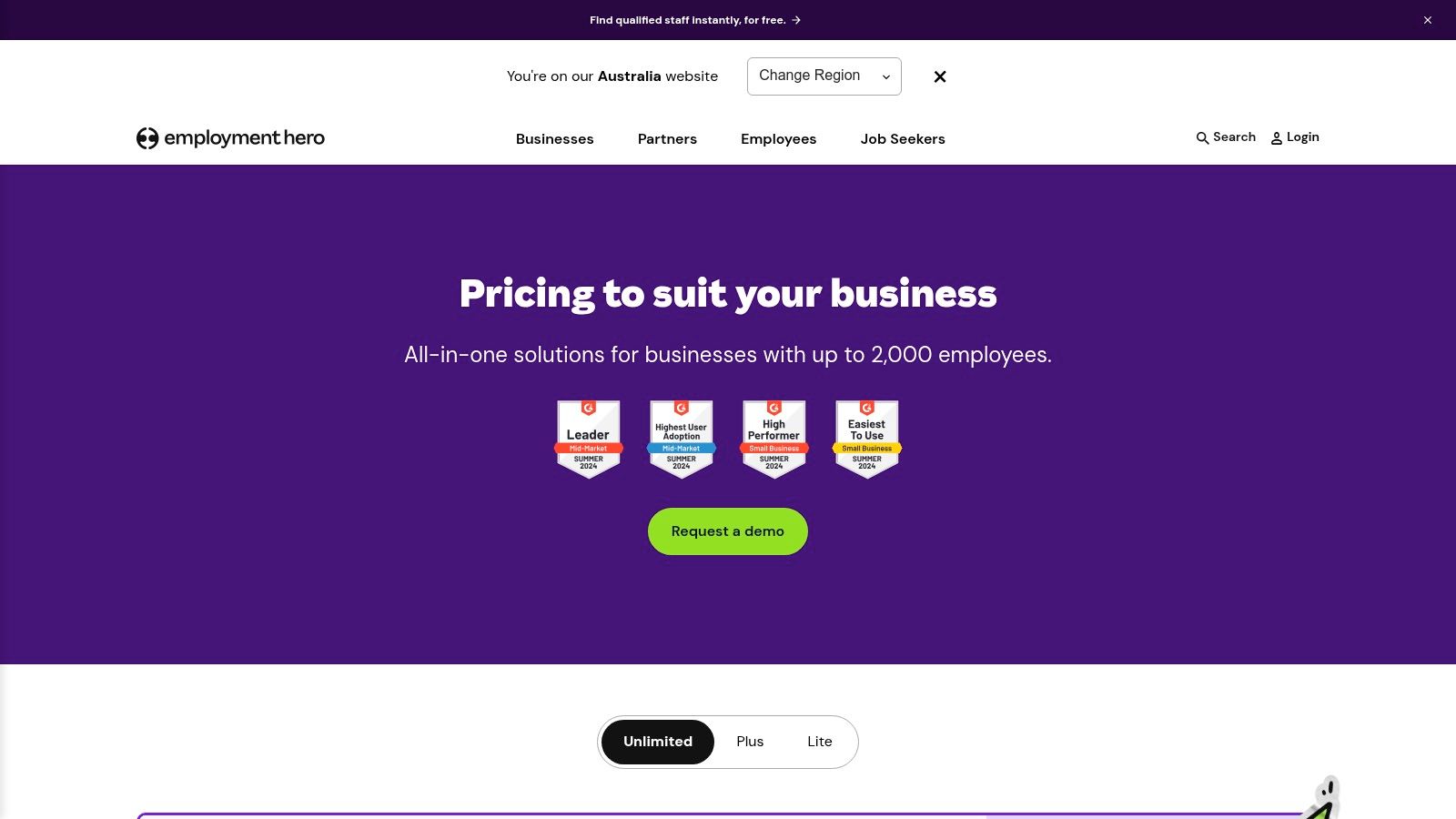
Pricing and Plans
Employment Hero Payroll is available as a standalone product or as part of a broader HR platform. Plans are typically priced per employee, per month, often with a monthly minimum spend.- Standard Payroll: Core payroll features, STP reporting, and employee self-service.
- Premium Payroll: Includes advanced features like rostering, timesheets, and award interpretation.
- Platinum HR: A full suite combining HR management with Premium payroll functionalities.
- Implementation packages are also available for an additional cost to assist with setup.
Key Considerations
| Pros | Cons |
|---|---|
| ✅ Powerful Australian award rules editor and automation | ❌ Per-employee pricing and monthly minimums apply |
| ✅ End-to-end people platform (HR + payroll) | ❌ Implementation help may be advisable for complex awards (extra cost) |
| ✅ Strong partner program for accountants and bookkeepers | ❌ Can be more complex than basic payroll-only systems |
5. Reckon Payroll: Accessible and Mobile-First
Reckon Payroll offers a streamlined and highly accessible solution aimed squarely at Australian small businesses, particularly those who value flexibility. Its key differentiator is the ability to manage and run payroll entirely from a mobile app, providing unparalleled convenience for business owners on the go. This mobile-first approach, combined with competitive entry-level pricing, makes it a strong contender for micro-businesses looking for one of the best payroll software Australia has to offer without a hefty price tag.
Pricing and Plans
Reckon's payroll pricing is simple and tiered based on employee numbers, with separate app and web-based products.- Payroll App: Free for 1 employee. Paid tiers for up to 4 employees, and another for up to 10 employees.
- Reckon One (Web): Payroll is an optional module within their accounting software. A base subscription is required, with payroll costing an additional monthly fee per employee.
Key Considerations
| Pros | Cons |
|---|---|
| ✅ Very competitive pricing for micro-businesses | ❌ Feature depth is less than comprehensive HR suites |
| ✅ Excellent mobile app for running payroll anywhere | ❌ Pricing can be confusing between web and app versions |
| ✅ Strong local support and Australian data hosting | ❌ Less suited for complex award interpretation needs |
6. Payroller: The Simple Choice for Micro Businesses
Payroller is designed specifically for sole traders and small teams who need a no-fuss, compliant payroll solution without a steep learning curve. As an ATO-registered and STP-enabled platform, it focuses on making the setup process incredibly fast, which is a major advantage for business owners handling payroll for the first time. Its core appeal lies in its simplicity and accessibility, offering a streamlined experience through both web and mobile apps. For micro-businesses seeking one of the most straightforward options for the best payroll software Australia has to offer, Payroller strips away complexity. It handles essential tasks like STP Phase 2 reporting, superannuation calculations, leave management, and payslip generation. Employees can also access their own information through a dedicated app, reducing administrative queries. While its core offering is lean, optional add-ons for timesheets and rosters provide a pathway for growth.
Pricing and Plans
Payroller uses a simple, pay-per-employee model, often with a free option for a single employee, making it highly accessible.- Payroller Free: A free plan is typically available for businesses with just one employee.
- Payroller Subscription: A low per-employee, per-month fee applies for businesses with more than one employee. Optional add-ons for features like timesheets and rostering are available for an additional cost. A minimum monthly spend often applies to the paid subscription.
Key Considerations
| Pros | Cons |
|---|---|
| ✅ Very low per-employee entry price | ❌ Minimum monthly spend can apply |
| ✅ Quick setup, ideal for first-time payroll users | ❌ Less suited to complex awards without add-ons |
| ✅ Mobile app for employers and employees | ❌ May be too basic for rapidly scaling businesses |
7. CloudPayroll: Flexible Service and Transparent Pricing
CloudPayroll carves out a unique space in the Australian market with its highly flexible service model and transparent, pay-run-based pricing. Instead of forcing businesses into a one-size-fits-all software subscription, it allows companies to choose their level of involvement, from complete do-it-yourself (DIY) payroll processing to fully outsourced data entry and superannuation management. This makes it a compelling option for businesses that want more control over their service level.
Pricing and Plans
CloudPayroll uses a pay-as-you-go model based on the number of employees per pay run, with a public calculator on its website for precise quotes.- Pricing: A base fee applies per pay run, plus a small additional fee for each employee included in that run.
- Add-ons: Optional services like outsourced data entry or managed superannuation come with their own clear, additional costs.
- Fees: Note that setup fees may apply, and GST and bank transaction fees are excluded from initial quotes.
Key Considerations
| Pros | Cons |
|---|---|
| ✅ Transparent per-pay-run pricing model | ❌ May not be cost-effective for very frequent pay runs |
| ✅ Flexible service options (DIY or outsourced) | ❌ Setup fees can apply, adding to initial cost |
| ✅ Strong Australian compliance and reporting features | ❌ Interface is more functional than modern |
8. ADP Australia (ADP Payline): Scalable Solutions for Growing Businesses
ADP is a global powerhouse in payroll and HR, and its Australian offering, ADP Payline, brings that extensive experience to businesses managing between 1 and 199 employees. It stands out by offering a clear growth pathway, allowing a company to start with a robust software solution and later transition to a fully managed or outsourced payroll service as its complexity increases. This scalability makes it a strategic choice for businesses planning for future expansion.
Pricing and Plans
ADP Payline does not offer standardised public pricing. Each plan is tailored to the specific needs of the business, requiring a direct quote.- ADP Payline: Customised pricing based on employee numbers and required service levels.
- Managed Payroll & HR Services: Broader, fully outsourced solutions are also available via custom quote for larger or more complex organisations.
Key Considerations
| Pros | Cons |
|---|---|
| ✅ Scales from software-only to fully outsourced payroll | ❌ Pricing is only available via a custom quote |
| ✅ Strong global expertise and local Australian support | ❌ Can be more expensive than off-the-shelf small business apps |
| ✅ High-level security and compliance framework | ❌ May have more features than necessary for very small teams |
9. Dayforce (Ceridian): Enterprise-Grade Human Capital Management
Dayforce, by Ceridian, is an enterprise-level Human Capital Management (HCM) platform designed for large, complex Australian organisations. It moves beyond standard payroll processing by offering a single, unified system for payroll, HR, time and attendance, scheduling, and talent management. Its key differentiator is a continuous pay calculation engine, which processes payroll data in real-time throughout the pay period, eliminating the need for traditional batch processing and providing greater accuracy.
Pricing and Plans
Dayforce operates on a bespoke, sales-led pricing model. Pricing is not publicly available and is tailored to the specific needs, size, and complexity of the organisation. This typically involves a detailed consultation, custom quote, and a structured implementation process.Key Considerations
| Pros | Cons |
|---|---|
| ✅ Single, fully integrated HCM & payroll platform | ❌ Best suited for larger or more complex organisations |
| ✅ Strong for complex, multi-award & multi-site needs | ❌ Sales-led quoting & longer implementation timelines |
| ✅ Real-time, continuous pay calculation engine | ❌ Can be overly complex for small-to-medium businesses |
10. Frontier Software (ichris HR & Payroll): The Enterprise-Grade Solution
For medium to large organisations requiring a powerful, highly configurable payroll and HR system, Frontier Software’s ichris platform is a formidable contender. Unlike many cloud-native solutions aimed at small businesses, ichris is built for complexity, capable of managing payroll for businesses with hundreds or even thousands of employees, including those with multi-country operations. This makes it a leading choice when considering the best payroll software Australia has for enterprise-level needs. The key differentiator for Frontier Software is its flexibility in service delivery. Organisations can choose to manage payroll in-house using the ichris software or fully outsource the entire function to Frontier's managed services team. This provides a crucial pathway for businesses to scale or adapt their operational models without changing their core system. The platform offers a deeply integrated suite covering HR, talent management, and workforce management, ensuring a single, authoritative source for all employee data.Pricing and Plans
Frontier Software does not offer standardised public pricing. Costs are customised based on the organisation's size, required modules (HR, payroll, etc.), and whether an in-house or outsourced model is chosen. A formal demonstration and scoping session is required to receive a detailed quote.Key Considerations
| Pros | Cons |
|---|---|
| ✅ Proven solution for large, complex organisations | ❌ Pricing is not transparent and requires a demo |
| ✅ Flexible delivery: in-house software or outsourced | ❌ Less suited for small businesses or start-ups |
| ✅ Integrated HR and workforce management suite | ❌ Implementation can be more complex than SMB tools |
11. The Access Group (MicrOpay / WageEasy / Attaché Payroll)
The Access Group caters to established Australian businesses with complex requirements or a preference for on-premise solutions. Its portfolio, which includes longstanding names like MicrOpay, WageEasy, and Attaché, offers robust payroll systems that can be deployed on-site or hosted, providing flexibility that many pure cloud providers lack. This makes it a key player for organisations with specific security protocols, legacy system integrations, or those transitioning to the cloud at their own pace.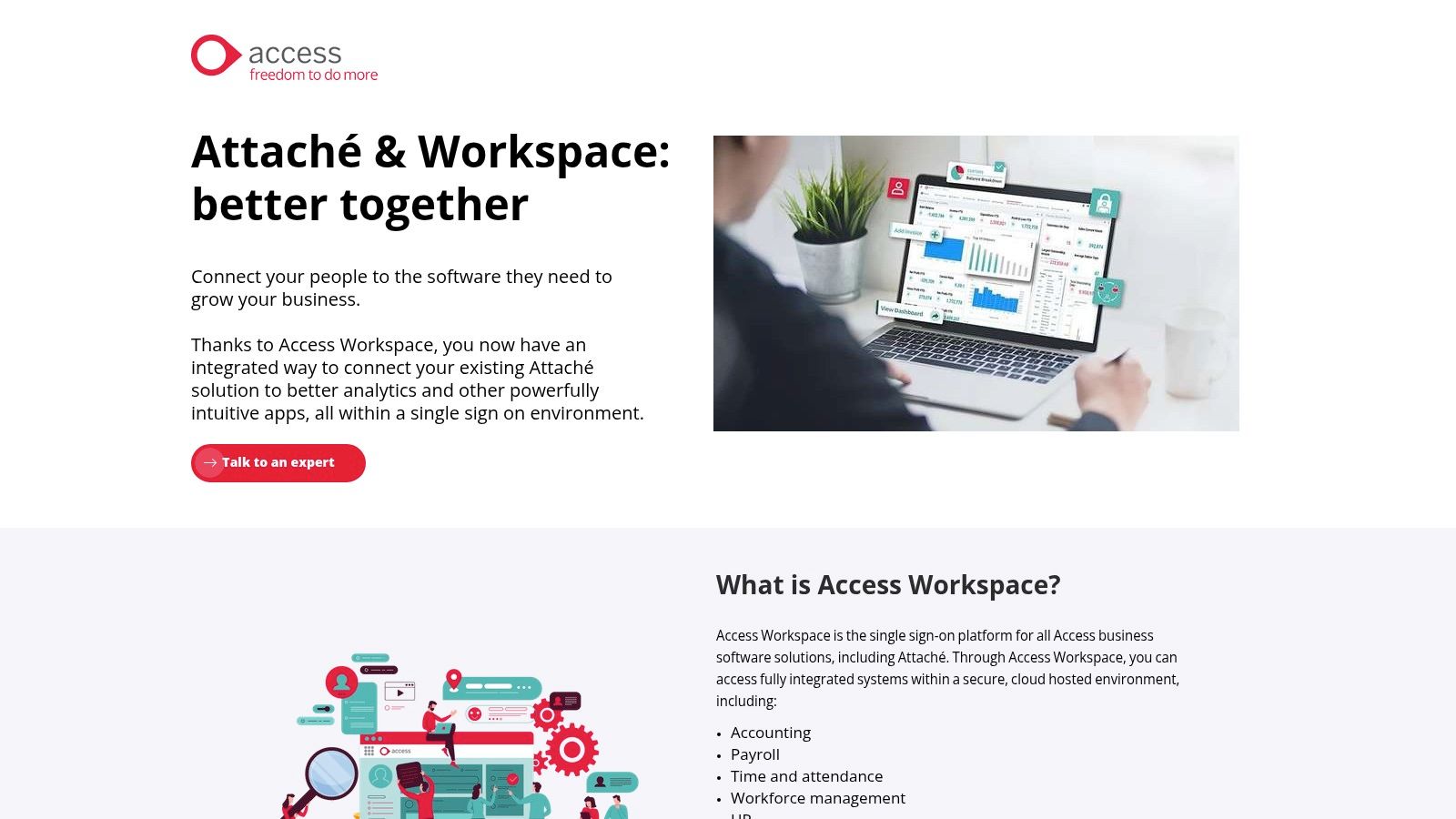
Pricing and Plans
Pricing for The Access Group's payroll solutions is customised based on the specific product (MicrOpay, WageEasy, Attaché), deployment model (on-premise or hosted), and the scale of business operations. Businesses must contact their sales team directly for a tailored quote that reflects their unique requirements.Key Considerations
| Pros | Cons |
|---|---|
| ✅ Flexible on-premise or hosted deployment | ❌ Pricing is not transparent and requires a sales quote |
| ✅ Broad services including EOY consulting and training | ❌ Some modules have legacy UIs compared to newer cloud rivals |
| ✅ Strong choice for businesses with complex legacy needs | ❌ Navigating the product families on the website can be complex |
12. Capterra Australia – Payroll Software Category
Rather than a single software, Capterra Australia offers a powerful research tool: a comprehensive directory of payroll solutions. It serves as an essential starting point for businesses wanting to survey the market, compare features, and read user reviews before committing to a provider. This platform helps you validate your shortlist and discover new contenders you may have missed, making it an invaluable resource in the search for the best payroll software Australia has to offer. Capterra allows users to filter hundreds of listings by specific features, business size, and industry, which helps to narrow down the vast number of options. You can quickly compare pricing models and see aggregated user ratings at a glance. The platform aggregates reviews from real-world users, providing honest insights into the pros and cons of each system beyond the marketing material. It's a free and efficient way to conduct initial due diligence and ensure you're making an informed choice.Pricing and Plans
Capterra is a free-to-use directory for buyers. Software vendors may pay for premium placement in the listings.Key Considerations
| Pros | Cons |
|---|---|
| ✅ Broad overview of the Australian market | ❌ Sponsored listings can influence visibility |
| ✅ User reviews provide genuine insights | ❌ Some listed software may lack local compliance |
| ✅ Time-saving discovery and comparison tool | ❌ Information relies on vendor-provided data |
Top 12 Australian Payroll Software Comparison
| Product | Core features ✨ | Best for 👥 | Pricing / Value 💰 | Quality / USP ★🏆 |
|---|---|---|---|---|
| Xero | STP payroll, auto‑super, timesheets, broad add‑ons ✨ | Small–mid businesses & Xero users 👥 | Subscription; payroll in some plans — watch plan changes 💰 | ★★★★ 🏆 Integrated ledger + mature AU compliance |
| MYOB Business – Payroll | STP2, leave, super, employee portal ✨ | Very small teams → growing businesses 👥 | Payroll‑Only low‑cost for ≤4 staff; per‑employee fees by plan 💰 | ★★★★ Deep AU support & affordable entry |
| QuickBooks Online + Payroll | STP, employee self‑service, timesheets; QBO integration ✨ | QBO customers / small businesses 👥 | QBO + per‑employee payroll add‑on (can scale cost) 💰 | ★★★★ Easy migration for QuickBooks users |
| Employment Hero (KeyPay) | Advanced award interpretation, rostering, onboarding ✨ | SMEs & mid‑market with complex awards 👥 | Per‑employee pricing + monthly mins; implementation extra 💰 | ★★★★ 🏆 Powerful award automation & end‑to‑end HR |
| Reckon Payroll | STP, mobile pay‑runs, simple tiers, AU hosting ✨ | Micro & small businesses 👥 | Competitive entry tiers (up to 4/10 emp) — value for micro firms 💰 | ★★★ Affordable + mobile flexibility |
| Payroller | STP2, web/mobile app, Xero integration, quick setup ✨ | Sole traders & micro teams / first‑time payroll 👥 | Very low per‑employee price; free trial; min spend applies 💰 | ★★★ Fast setup and low entry cost |
| CloudPayroll (Australia) | STP, SuperChoice auto‑super, employee kiosk, pay‑run pricing ✨ | Businesses preferring per‑pay‑run or managed options 👥 | Transparent per‑pay‑run fees; setup fees may apply 💰 | ★★★★ Flexible DIY/outsourced options |
| ADP Australia (Payline) | STP, PAYG, super, secure cloud, local support ✨ | 1–199 emp and organisations needing scale/outsourcing 👥 | Quote‑based; can be costlier than SME apps 💰 | ★★★★ 🏆 Scales from software to fully outsourced payroll |
| Dayforce (Ceridian) | Continuous payroll calc, time & attendance, scheduling ✨ | Mid → large employers & multi‑site organisations 👥 | Sales‑led quoting; longer implementation timelines 💰 | ★★★★ Integrated HCM + payroll for complex needs |
| Frontier Software (ichris) | Multi‑country payroll, outsourcing, HR integration ✨ | Mid‑enterprise to large organisations 👥 | Demo/quote pricing; enterprise costing 💰 | ★★★★ Proven vendor for large‑scale payroll |
| The Access Group (MicrOpay/WageEasy) | STP, hosted/on‑prem options, EOY services ✨ | Firms needing hybrid/legacy or deep consulting 👥 | Product‑family pricing; sales‑led quotes 💰 | ★★★ Broad portfolio & consulting/training services |
| Capterra Australia – Payroll | Vendor listings, reviews, filters, trial links ✨ | Buyers shortlisting payroll solutions 👥 | Free to use; sponsored listings exist 💰 | ★★★ Market view & user reviews for validation |
Making Your Final Decision and Seeking Expert Advice
Navigating the landscape of Australian payroll software can feel overwhelming. We've explored a dozen powerful platforms, from all-in-one accounting suites like Xero and QuickBooks to dedicated payroll powerhouses like Employment Hero and enterprise-grade solutions such as Dayforce and ADP. The key takeaway is clear: there is no single "best" solution for every business. The right choice is deeply personal to your organisation's unique circumstances. A sole trader with no employees has vastly different needs than a manufacturing firm with 200 staff covered by multiple complex modern awards. Similarly, a high-growth tech startup prioritising scalability and API integrations will value different features than a family-run property investment company focused on straightforward compliance and ease of use. Your journey to finding the best payroll software Australia has to offer begins with a clear understanding of your own requirements.Creating Your Shortlist: A Practical Framework
To move from this comprehensive list to a confident decision, you need a structured evaluation process. Don't get distracted by flashy features you'll never use. Instead, focus on the core elements that will directly impact your day-to-day operations and long-term compliance. Use the detailed reviews in this article to create a shortlist of two to three top contenders. Filter your options based on these critical factors:- Business Size and Scalability: Are you a small business that fits perfectly with Payroller or MYOB's Payroll Only plan, or do you anticipate rapid growth and need a platform like Employment Hero that can scale with you?
- Industry Complexity: Does your business operate under complex modern awards or enterprise bargaining agreements (EBAs)? If so, the award interpretation engines in platforms like Employment Hero or dedicated solutions from The Access Group become non-negotiable.
- Integration Ecosystem: How critical is it for your payroll to communicate seamlessly with your accounting software, rostering tools, or HR platform? Xero and QuickBooks excel here with their extensive app marketplaces, while specialised systems may require more complex integrations.
- Budget and Total Cost of Ownership: Look beyond the initial subscription fee. Consider implementation costs, training requirements, and charges for additional support or features. A "cheaper" solution can quickly become expensive if it requires significant manual workarounds.
- User Experience and Support: Who will be using the software? The platform must be intuitive for your team. Furthermore, evaluate the quality and accessibility of Australian-based customer support, as this can be a lifesaver during critical pay runs.
The Critical Next Steps: From Shortlist to Selection
Once you have your shortlist, it's time to get hands-on. Reading reviews is one thing; experiencing the software is another.- Utilise Free Trials: Most providers targeting small to medium businesses offer a free trial period. Use this time to process a mock pay run with your actual employee data and scenarios. Test the features that matter most to you.
- Request Personalised Demos: For more complex, enterprise-level systems like ADP or Dayforce, a personalised demo is essential. Prepare a list of specific questions and scenarios relevant to your business to see exactly how the platform handles them.
- Validate Compliance and Support: Ask direct questions about their Single Touch Payroll (STP) Phase 2 reporting capabilities, superannuation clearing house (SuperStream) compliance, and their roadmap for future legislative changes in Australia.
Selecting the right software is a crucial first step, but ensuring it's implemented correctly and managed for ongoing compliance is what truly matters. The experts at Australia Wide Tax Solutions can guide you through this entire process, from software selection and setup to ongoing bookkeeping and BAS lodgement. Ensure your payroll system is a powerful asset, not a compliance risk, by partnering with a team that understands the intricate details of Australian business. Visit Australia Wide Tax Solutions to learn how professional guidance can secure your peace of mind.
The ATO provides guidance through ato.gov.au, the Small Business Support Line (13 28 66), and Online Services for individuals and businesses. For complex situations, a registered tax agent provides advice tailored to your specific circumstances and professional indemnity protection. You can verify agent registration at the TPB register at tpb.gov.au.
Most tax records must be kept for five years from the date of lodgement or the date the transaction occurred, whichever is later. Records must be in English or convertible to English and must be sufficient to explain the income and deductions in your return. The ATO can request records at any time during the retention period.
Consider a registered tax agent when your affairs involve multiple income sources, business activity, investment properties, capital gains, or overseas income. Agents extend your lodgement deadline, provide safe harbour protection, and take professional responsibility for the advice given. Verify registration at tpb.gov.au.
The failure to lodge penalty is based on penalty units ($313 per unit from 1 July 2023), accruing per 28-day period for late returns and BAS lodgements. Incorrect information penalties range from 25% to 75% of the tax shortfall depending on whether the behaviour was careless, reckless, or intentional. Proactive disclosure before an audit begins typically results in significantly reduced penalties.
Tax minimisation is the legal arrangement of your affairs to reduce tax — claiming all eligible deductions, using appropriate structures, and timing income and expenses. Tax avoidance involves arrangements that technically comply with the law but achieve outcomes parliament did not intend. The ATO can apply Part IVA anti-avoidance rules to cancel benefits from avoidance arrangements.
Tax return step-by-step guide
Tax season can be a daunting time for many people, but it doesn't have to be.
- Tax return step-by-step guide
- Gather Your Documents
- Determine Your Filing Status
- Understand Tax Deductions and Credits
- Choose Your Lodgement Method
Lodging your tax return doesn't have to be a complicated or stressful process.
In this comprehensive guide, we'll walk you through a tax return step-by-step process for successfully lodging tax returns, ensuring the best possible outcome.
Whether you're filing your taxes for the first time or a seasoned pro, this post will provide you with the knowledge and tools you need to confidently navigate the tax landscape.
From gathering the necessary documents to understanding tax deductions and credits, we've got you covered.
So, let's dive in and explore the ins and outs of lodging your tax return.
Gather Your Documents
The first step in lodging your tax return is to gather all the necessary documents. This includes:
- Income Statements: Collect any income statements you've received, such as your payment summaries (previously known as group certificates), interest statements from banks, dividend statements, and any other documents that show your income sources.
- Deduction Receipts: Gather all receipts and documents related to any potential tax deductions, such as work-related expenses, charitable donations, medical expenses, and more.
- Government Assistance Statements: If you've received any government assistance, such as Centrelink payments or the JobKeeper or JobSeeker programs, make sure you have the relevant statements.
- Investment Statements: Collect any statements related to your investments, such as shares, rental properties, or managed funds.
- Personal Information: Have your personal details on hand, including your tax file number, date of birth, and contact information.
Organizing these documents ahead of time will make the lodgement process much smoother and ensure you don't miss any important information.
Determine Your Filing Status
Your filing status is an important factor in determining your tax obligations and the deductions or credits you may be eligible for. The main filing statuses in Australia are:
- Individual: If you're filing your tax return as a single person, you'll use the individual filing status.
- Married/De Facto: If you're married or in a de facto relationship, you may be able to file a joint tax return with your spouse or partner.
- Head of Household: This status applies if you're supporting a dependent, such as a child or a parent, and you're not married or in a de facto relationship.
- Sole Trader: If you're self-employed and operating as a sole trader, you'll need to file your tax return as a sole trader.
Carefully review the eligibility requirements for each filing status to ensure you select the one that best fits your personal and financial situation.
Understand Tax Deductions and Credits
Tax deductions and credits can significantly reduce your tax liability, so it's essential to understand what you may be eligible for. Some common deductions and credits include:
- Work-Related Expenses: This includes expenses you've incurred as part of your job, such as tools, uniforms, travel, and continuing education.
- Charitable Donations: Donations to registered charities and non-profit organizations are generally tax-deductible.
- Medical Expenses: Certain medical expenses, such as those related to disability or chronic illness, may be eligible for a tax deduction.
- Investment Expenses: Expenses related to managing your investments, such as accounting fees or interest on investment loans, may be deductible.
- Tax Offsets: Tax offsets, such as the low-income tax offset or the seniors and pensioners tax offset, can directly reduce the amount of tax you owe.
Carefully review the eligibility criteria for each deduction and credit to ensure you're claiming everything you're entitled to. If not sure please download our tax checklist here.
Choose Your Lodgement Method
There are several ways to lodge your tax return in Australia, each with its own advantages and considerations:
- Australian Taxation Office (ATO) e-tax: The ATO's e-tax platform allows you to lodge your tax return online using a secure, user-friendly interface. This is a popular option for many taxpayers as it's free and relatively straightforward.
- Tax Agent: Engaging a registered tax agent, such as an accountant or tax professional, can be beneficial if your tax situation is more complex. They can ensure you're maximizing your deductions and credits, and they can handle the lodgement process on your behalf.
- Tax Preparation Software: Various tax preparation software programs, such as TaxAct or TurboTax, are available that can guide you through the lodgement process. These can be a good option if you're comfortable handling your own tax return but want some additional support.
- Paper Tax Return: While less common these days, you can still lodge your tax return by mail using a paper form. This may be preferable if you're uncomfortable with digital platforms or your tax situation is relatively simple. Click here if you want the paper version of the income-tax return 2024
When choosing your lodgement method, consider your personal preferences, the complexity of your tax situation, and any potential cost savings.
Understand Key Deadlines and Dates
Staying on top of important tax deadlines and dates is crucial to ensure you lodge your return on time and avoid any penalties or late fees. Some key dates to be aware of include:
- 30 June: This is the end of the financial year in Australia, and it's the last day to claim deductions for the previous year.
- 31 October: This is the standard due date for individual tax returns. If you're lodging your own return, it needs to be submitted by this date.
- 15 May: If you're using a registered tax agent, your tax return is typically due by this date. However, tax agents can often obtain an extension to lodge returns later in the year.
- 5 September: This is the deadline for making any required amendments to your tax return for the previous financial year.
It's important to note that the ATO may impose penalties or interest charges if you miss these deadlines, so be sure to plan accordingly.
Review and Submit Your Tax Return
Before you submit your tax return, it's essential to carefully review it to ensure all the information is accurate and complete. Double-check the following:
- Personal Details: Verify that your name, address, tax file number, and other personal information are correct.
- Income and Deductions: Ensure all your income sources are accurately reported and that you've claimed all eligible deductions and credits.
- Calculations: Carefully review the calculations to make sure your tax liability and any refund amounts are correct.
- Lodgement Method: Confirm that you've selected the appropriate lodgement method (e.g., e-tax, tax agent, or paper return) and that you've followed all the necessary steps.
Once you're satisfied that your tax return is complete and accurate, you can proceed with the lodgement process. If you're using e-tax or tax preparation software, this will typically involve submitting your return electronically. If you're working with a tax agent, they will handle the lodgement on your behalf.
Understand the ATO's Response and Next Steps
After you've lodged your tax return, you can expect to receive a response from the ATO. This may include:
- Notice of Assessment: The ATO will issue a Notice of Assessment, which outlines your final tax liability and any refund or payment due.
- Refund: If you're entitled to a tax refund, the ATO will process the payment and deposit the funds into your nominated bank account.
- Tax Debt: If you owe additional tax, the ATO will provide instructions on how to make the payment, including due dates and payment options.
- Amendments: If the ATO identifies any issues or discrepancies in your tax return, they may request additional information or require you to make amendments.
It's important to carefully review the ATO's response and take any necessary action, such as making a payment or providing additional documentation. Staying on top of these steps will help ensure a smooth tax season and avoid any potential penalties or issues.
Conclusion
Lodging your tax return doesn't have to be a daunting task. By following the steps outlined in this guide, you can navigate the process with confidence and ensure you get the best possible outcome.
Remember to gather all the necessary documents, understand your filing status and available deductions. Credits, choose the right lodgement method, and stay on top of key deadlines.
With a little preparation and attention to detail, you can take the stress out of tax season and focus on maximizing your tax return.
If you have any further questions or need additional support, don't hesitate to consult a registered tax agent or the Australian Taxation Office. Happy tax season!
The ATO provides guidance through ato.gov.au, the Small Business Support Line (13 28 66), and Online Services for individuals and businesses. For complex situations, a registered tax agent provides advice tailored to your specific circumstances and professional indemnity protection. You can verify agent registration at the TPB register at tpb.gov.au.
Most tax records must be kept for five years from the date of lodgement or the date the transaction occurred, whichever is later. Records must be in English or convertible to English and must be sufficient to explain the income and deductions in your return. The ATO can request records at any time during the retention period.
Consider a registered tax agent when your affairs involve multiple income sources, business activity, investment properties, capital gains, or overseas income. Agents extend your lodgement deadline, provide safe harbour protection, and take professional responsibility for the advice given. Verify registration at tpb.gov.au.
The failure to lodge penalty is based on penalty units ($313 per unit from 1 July 2023), accruing per 28-day period for late returns and BAS lodgements. Incorrect information penalties range from 25% to 75% of the tax shortfall depending on whether the behaviour was careless, reckless, or intentional. Proactive disclosure before an audit begins typically results in significantly reduced penalties.
Tax minimisation is the legal arrangement of your affairs to reduce tax — claiming all eligible deductions, using appropriate structures, and timing income and expenses. Tax avoidance involves arrangements that technically comply with the law but achieve outcomes parliament did not intend. The ATO can apply Part IVA anti-avoidance rules to cancel benefits from avoidance arrangements.
Understanding Tax Rates for Minors in Australia
Navigating the world of taxes can be daunting, especially for young people just starting to earn their own income. In Australia, the tax system has specific provisions for individuals under 18, which can be quite different from the standard tax rates and requirements.
- Understanding Tax Rates for Minors in Australia
- Understanding the Basics of Taxes for Minors in Australia
- Familiar Sources of Income for Minors in Australia
- Strategies for Minors to Manage Taxes in Australia
- Conclusion
As a minor in Australia, it's essential to understand how your income is taxed and what deductions or exemptions you may be eligible for. This knowledge can help you maximize your earnings and meet your tax obligations.
In this comprehensive blog post, we'll dive into the Tax rates if you're under 18 years old. We'll cover the key factors determining your tax liability, common deductions and credits available, and strategies for managing your taxes as a young earner. Whether you're a student with a part-time job or an entrepreneur starting your own business, this guide will provide you with the information you need to confidently and effectively manage your taxes.
Understanding the Basics of Taxes for Minors in Australia
In Australia, individuals under 18 are subject to a different tax system than adults. The primary differences lie in the tax rates, deductions, and reporting requirements. Let's start by exploring the general tax landscape for minors in the country.
Tax Rates for Minors in Australia
The Tax rates if you're under 18 years old in Australia are calculated differently than for adults. Instead of the standard tax brackets, minors are subject to a specific set of tax rates generally higher than the adult rates.
For the 2022-2023 financial year, the tax rates for minors in Australia are as follows:
- On the first $416 of taxable income, the tax rate is 0%.
- On taxable income between $416 and $3,682, the tax rate is 66%.
- On taxable income above $3,682, the tax rate is 45%.
It's important to note that these rates apply to your total taxable income, not just the income earned from a part-time job or other sources. Taxable income includes all forms of income, such as wages, interest, dividends, and other earnings.
Deductions and Exemptions for Minors
As a minor, you may be eligible for certain deductions and exemptions that can help reduce your overall tax liability. Some of the standard deductions and exemptions available include:
- Low Income Tax Offset (LITO): The LITO is a tax offset that can reduce the amount of tax you owe. For the 2022-2023 financial year, the maximum LITO is $700.
- Dependent Spouse Tax Offset: If you're supporting a spouse with a low income, you may be eligible for the Dependent Spouse Tax Offset, which can further reduce your tax bill.
- Deductions for Work-Related Expenses: As a minor, you can claim deductions for expenses incurred in earning your income, such as work-related tools, uniforms, or travel expenses.
- Dividend Imputation Credits: If you've received dividends from Australian companies, you may be able to claim the dividend imputation credits, which can offset your tax liability.
You must keep detailed records of your income and expenses throughout the year to ensure you claim all eligible deductions and exemptions when filing your tax return.
Tax Reporting and Filing Requirements
As a minor in Australia, you must file a tax return if your total taxable income exceeds the tax-free threshold, which is currently set at $18,200 for the 2022-2023 financial year.
If your taxable income is below the tax-free threshold, you may not be required to file a tax return, but you may still want to do so to claim any available deductions or offsets.
When filing your tax return, you'll need to use the appropriate tax form, which may differ from the standard tax return forms used by adults. It's important to carefully review the instructions and seek assistance from a tax professional if you're unsure about any aspect of the process.
Familiar Sources of Income for Minors in Australia
As a minor in Australia, you may have various sources of income, each with its own tax implications. Let's explore some of the most common types of income and how they're taxed.
Wages and Salaries
If you have a part-time job or a casual employment arrangement, the income you earn from your wages or salary will be subject to the tax rates for minors. Your employer will typically withhold the appropriate amount of tax from your pay and remit it to the Australian Taxation Office (ATO) on your behalf.
Interest and Dividends
If you have savings accounts, investments, or shares that generate interest or dividends, these forms of income will also be subject to the tax rates for minors. You'll need to report this income on your tax return, and any withholding tax deducted by the financial institution can be claimed as a credit.
Business Income
If you're running your own business or freelancing, any income generated from your entrepreneurial activities will be considered business income and will be taxed accordingly. You'll need to keep detailed records of your income and expenses, and you may be required to make periodic tax payments throughout the year.
Other Sources of Income
Minors in Australia may also receive income from other sources, such as:
- Rental income from property investments
- Royalties from creative works (e.g., writing, music, or art)
- Inheritances or gifts
- Government benefits or allowances
Regardless of the source, all forms of income must be reported on your tax return, and the appropriate tax rates and deductions will apply.
Strategies for Minors to Manage Taxes in Australia
As a minor in Australia, there are several strategies you can employ to manage your taxes and maximize your earnings effectively. Let's explore some key considerations:
Understand Your Tax Obligations
The first step is to familiarize yourself with the tax system and your specific obligations as a minor. Review the tax rates, deductions, and reporting requirements, and seek guidance from a tax professional if you have any questions or concerns.
Maintain Accurate Records
Keeping detailed records of your income, expenses, and any deductions or credits you're eligible for is crucial. This will not only help you file your tax return accurately but also ensure you're claiming all the available tax benefits.
Utilize Tax Deductions and Offsets
Explore the various deductions and offsets available to minors, such as the Low Income Tax Offset, work-related expense deductions, and dividend imputation credits. Consult with a tax professional to ensure you're taking advantage of all the tax-saving opportunities.
Consider Income-Splitting Strategies
If you have a significant amount of income, you may be able to reduce your tax liability through income-splitting strategies. This could involve transferring a portion of your income to a family member or setting up a trust arrangement.
Plan for Tax Payments
Depending on your income sources and the amount of tax withheld by your employer or other payers, you may need to make periodic tax payments throughout the year. Develop a plan to ensure you have the necessary funds available to meet your tax obligations.
Seek Professional Assistance
If you're unsure about any aspect of your taxes or have a complex financial situation, consider seeking the guidance of a qualified tax professional, such as an accountant or a tax agent. They can provide valuable advice and help you navigate the tax system effectively.
Conclusion
As a minor in Australia, understanding the tax system and managing your tax obligations is an important step towards financial literacy and independence. By familiarizing yourself with the Tax rates if you're under 18 years olds, deductions, and reporting requirements, you can ensure you're meeting your tax responsibilities while maximizing your earnings.
Remember, staying organized, utilizing available tax benefits, and seeking professional assistance when needed can go a long way in helping you navigate the tax landscape as a young earner in Australia. With the right strategies and knowledge, you can take control of your finances and set yourself up for future success.
If you have any further questions or need additional guidance, don't hesitate to reach out to a tax professional or the Australian Taxation Office for assistance.
The ATO provides guidance through ato.gov.au, the Small Business Support Line (13 28 66), and Online Services for individuals and businesses. For complex situations, a registered tax agent provides advice tailored to your specific circumstances and professional indemnity protection. You can verify agent registration at the TPB register at tpb.gov.au.
Most tax records must be kept for five years from the date of lodgement or the date the transaction occurred, whichever is later. Records must be in English or convertible to English and must be sufficient to explain the income and deductions in your return. The ATO can request records at any time during the retention period.
Consider a registered tax agent when your affairs involve multiple income sources, business activity, investment properties, capital gains, or overseas income. Agents extend your lodgement deadline, provide safe harbour protection, and take professional responsibility for the advice given. Verify registration at tpb.gov.au.
The failure to lodge penalty is based on penalty units ($313 per unit from 1 July 2023), accruing per 28-day period for late returns and BAS lodgements. Incorrect information penalties range from 25% to 75% of the tax shortfall depending on whether the behaviour was careless, reckless, or intentional. Proactive disclosure before an audit begins typically results in significantly reduced penalties.
Tax minimisation is the legal arrangement of your affairs to reduce tax — claiming all eligible deductions, using appropriate structures, and timing income and expenses. Tax avoidance involves arrangements that technically comply with the law but achieve outcomes parliament did not intend. The ATO can apply Part IVA anti-avoidance rules to cancel benefits from avoidance arrangements.
Introduction ATO Prosecution.
Being prosecuted by the Australian Taxation Office (ATO) can be a stressful and overwhelming experience. What to do if you are prosecuted by the ATO. Whether you're facing allegations of tax evasion, failure to lodge returns, or other tax-related offenses, the prospect of going to court can be daunting. However, it's essential to understand your rights and take the necessary steps to protect yourself.
- Introduction ATO Prosecution.
- Understanding the Prosecution Process
- Seeking Legal Representation
- Gathering Evidence and Documentation
- Preparing for Court
In this blog post, we'll explore what to do if you find yourself in this situation, providing practical guidance and advice to help you navigate the legal process and achieve the best possible outcome.
Understanding the Prosecution Process
When the ATO decides to prosecute an individual or business, they will typically send a formal notice outlining the allegations against you. This notice will outline the offenses you're being charged with and the evidence the ATO has gathered to support their case. What to do if you are prosecuted by the ATO?
It's essential to take this notice seriously and seek legal advice immediately. The prosecution process can be complex, and having an experienced tax lawyer on your side can significantly affect the outcome.
Seeking Legal Representation
One crucial step is to retain the services of a qualified tax lawyer. These professionals have a deep understanding of tax law and the ATO's prosecution procedures, and they can provide invaluable guidance and support throughout the process.
Your lawyer will help you understand the charges against you, assess the strength of the ATO's case, and develop a robust defense strategy. They can also negotiate with the ATO on your behalf, potentially leading to a more favorable outcome, such as reduced charges or penalties.
Choosing a lawyer specializing in tax law with a proven track record of success in ATO prosecutions is essential. The lawyer should be able to provide you with a clear understanding of the fees and costs associated with their services and a realistic assessment of your chances of success.
Gathering Evidence and Documentation
Once you've secured legal representation, the next step is to gather all relevant documentation and evidence that may support your case. This can include financial records, tax returns, invoices, and other documentation demonstrating your compliance with tax laws.
Your lawyer will work with you to ensure that all necessary evidence is collected and organized so that it can be effectively presented in court. They may also conduct their investigations, interview witnesses, and gather additional information to strengthen their defense.
Preparing for Court
If the case proceeds to court, you and your lawyer must prepare thoroughly for the hearing. This may involve:
- Reviewing the ATO's evidence and developing a strategy to challenge or refute it
- Preparing your witnesses and evidence to support your defense
- Practicing your testimony and responses to potential questions from the prosecution
- Familiarizing yourself with the court procedures and etiquette
Your lawyer will guide you through this process, ensuring you're fully prepared and confident when presenting your case.
Negotiating with the ATO
In some cases, it may be possible to negotiate with the ATO to reach a settlement or plea bargain before the case goes to court. Your lawyer can engage in discussions with the ATO's legal team to explore options such as:
- Reduced charges or penalties
- Alternative dispute resolution, such as mediation or arbitration
- Entering into a payment plan or other arrangement to address the outstanding tax debt
Negotiating with the ATO can be complex and delicate, and having an experienced tax lawyer on your side is crucial to ensure the best possible outcome.
Attending Court
If the case goes to court, preparing for the proceedings is essential. This may involve:
- Arriving early and dressing appropriately for the courtroom setting
- Listening carefully to the evidence presented by the prosecution and taking notes
- Providing clear and concise testimony when it's your turn to present your case
- Remaining calm and composed, even in the face of aggressive questioning from the prosecution
Your lawyer will guide you through the court proceedings, objecting to improper evidence or questioning and presenting your defense most effectively.
Sentencing and Appeals
If the court finds you guilty of the charges, the next step will be the sentencing process. Your lawyer will work to minimize your penalties, potentially arguing for a more lenient sentence, such as a fine or community service, rather than a jail term.
In some cases, you may have the option to appeal the court's decision. Your lawyer can advise you on the merits of an appeal and guide you through the process, which may involve submitting additional evidence or arguing against the court's interpretation of the law.
Conclusion
Being prosecuted by the ATO can be a daunting and stressful experience. Still, with the proper legal support and a proactive approach, you can increase your chances of a favorable outcome. By understanding the prosecution process, seeking experienced legal representation, and preparing thoroughly for court, you can navigate this challenging situation and protect your rights.
Remember, the key is to act quickly, gather all relevant evidence, and work closely with your tax lawyer to develop a robust defense strategy. With the right approach, you can minimize the impact of the ATO's prosecution and confidently move forward. Contact us immediately if you think this will happen to you, and have all your paperwork ready for us; please also download our tax checklist here.
The ATO provides guidance through ato.gov.au, the Small Business Support Line (13 28 66), and Online Services for individuals and businesses. For complex situations, a registered tax agent provides advice tailored to your specific circumstances and professional indemnity protection. You can verify agent registration at the TPB register at tpb.gov.au.
Most tax records must be kept for five years from the date of lodgement or the date the transaction occurred, whichever is later. Records must be in English or convertible to English and must be sufficient to explain the income and deductions in your return. The ATO can request records at any time during the retention period.
Consider a registered tax agent when your affairs involve multiple income sources, business activity, investment properties, capital gains, or overseas income. Agents extend your lodgement deadline, provide safe harbour protection, and take professional responsibility for the advice given. Verify registration at tpb.gov.au.
The failure to lodge penalty is based on penalty units ($313 per unit from 1 July 2023), accruing per 28-day period for late returns and BAS lodgements. Incorrect information penalties range from 25% to 75% of the tax shortfall depending on whether the behaviour was careless, reckless, or intentional. Proactive disclosure before an audit begins typically results in significantly reduced penalties.
Tax minimisation is the legal arrangement of your affairs to reduce tax — claiming all eligible deductions, using appropriate structures, and timing income and expenses. Tax avoidance involves arrangements that technically comply with the law but achieve outcomes parliament did not intend. The ATO can apply Part IVA anti-avoidance rules to cancel benefits from avoidance arrangements.
Introduction
In today's business world, compliance with tax regulations is crucial for the success and sustainability of any enterprise. One such important tax scheme that businesses need to adhere to is the PAYG withholding tax scheme. This scheme requires businesses to withhold a certain amount of tax from payments made to employees, contractors, and other entities. In this blog post, we will provide you with a comprehensive guide on how to register your business with the Australian Taxation Office (ATO) under the PAYG withholding tax scheme.
- Introduction
- Section 1: Understanding PAYG Withholding Tax
- Section 2: Who Needs to Register for PAYG Withholding?
- Section 3: Benefits of Registering for PAYG Withholding
- Section 4: How to Register for PAYG Withholding
Section 1: Understanding PAYG Withholding Tax
Before delving into the registration process, it is essential to have a clear understanding of what the PAYG withholding tax scheme entails. The Pay As You Go (PAYG) withholding system requires businesses to withhold a portion of payments made to employees, suppliers, and other entities and remit this amount to the ATO on their behalf. This system ensures that tax is collected throughout the income year, preventing tax liabilities from accumulating.
Section 2: Who Needs to Register for PAYG Withholding?
Not all businesses are required to register for PAYG withholding. Generally, if your business makes payments that are subject to withholding, such as salary and wages, payments to contractors, dividends, and interest, you will need to register for PAYG withholding. It is important to assess your business activities and determine whether you meet the threshold for registration.
Section 3: Benefits of Registering for PAYG Withholding
There are several benefits to registering your business for PAYG withholding. Firstly, it ensures compliance with tax laws and avoids penalties for non-compliance. Secondly, it streamlines the process of tax reporting and payment to the ATO. Additionally, registering for PAYG withholding can enhance your business's credibility and reputation, as it demonstrates a commitment to responsible financial management.
Section 4: How to Register for PAYG Withholding
The process of registering your business for PAYG withholding is straightforward and can be done online through the ATO's Business Portal or by completing a paper form. To register online, you will need an Australian Business Number (ABN) and Tax File Number (TFN) for your business. You will also need to provide information about your business structure, contact details, and banking information for electronic funds transfer.
Section 5: Responsibilities After Registering for PAYG Withholding
Once you have successfully registered for PAYG withholding, there are several responsibilities that your business must fulfill. These include withholding the correct amount of tax from payments, issuing payment summaries to employees and other payees, lodging activity statements with the ATO, and remitting withheld amounts to the ATO by the due dates.
Section 6: Common Mistakes to Avoid
When registering for PAYG withholding, there are common mistakes that businesses should avoid to ensure smooth compliance with tax regulations. These include providing incorrect information during the registration process, failing to withhold the correct amount of tax from payments, and missing deadlines for lodgment and payment to the ATO.
Section 7: Seeking Professional Advice
Navigating the complexities of tax regulations can be challenging for business owners, especially those who are unfamiliar with the requirements of the PAYG withholding tax scheme. Seeking professional advice from a tax accountant or financial advisor can provide valuable guidance and ensure that your business remains compliant with its tax obligations.
Section 8: Resources and Support
The ATO offers a range of resources and support services to help businesses understand and comply with the PAYG withholding tax scheme. These include online guides and tutorials, webinars, and access to a dedicated small business helpline for assistance with any queries related to PAYG withholding.
Section 9: Conclusion
In conclusion, registering your business with the ATO under the PAYG withholding tax scheme is a fundamental step towards ensuring compliance with tax laws and maintaining the financial health of your enterprise. By understanding the requirements of the scheme, fulfilling your responsibilities, and seeking professional advice when needed, you can navigate the world of tax regulations with confidence and peace of mind.
Section 10: Disclaimer
This blog post is intended for informational purposes only and should not be construed as professional tax advice. For personalized guidance on registering your business for PAYG withholding, we recommend consulting with a qualified tax professional or contacting the Australian Taxation Office directly.
Remember, compliance with tax regulations is essential for the success and longevity of your business. Registering for PAYG withholding is just one aspect of fulfilling your tax obligations as a business owner. Stay informed, stay compliant, and watch your business thrive!
PAYG withholding is the system by which employers deduct tax from payments before remitting the net amount to the payee. Any business that employs staff, engages contractors under a voluntary agreement, or pays certain investment income must register for PAYG withholding and remit withheld amounts to the ATO.
Use the ATO's tax withheld calculator or the published tax tables. The amount depends on the employee's earnings, pay frequency, tax-free threshold claim, and any HELP debt. Enter the gross weekly or fortnightly pay into the relevant ATO table and withhold the corresponding amount. Update calculations whenever the employee's circumstances change.
Under-withholding means the employee may owe tax at year end and the employer may face a shortfall penalty. Over-withholding creates a refund for the employee. Correct errors promptly by adjusting future pay runs and reporting corrections via Single Touch Payroll finalisation at year end.
Payment frequency depends on withholder category. Large withholders (over $1 million annually) pay electronically by the next business day. Medium withholders ($25,000–$1 million) pay monthly. Small withholders (under $25,000) pay quarterly with the BAS. All withholders must report through STP on or before each payday.
A TFN declaration is completed by employees when they start work. It records the TFN, tax-free threshold claim, and HELP debt status. Without a declaration, employers must withhold at 47%. An incorrect declaration affects withholding accuracy for the entire employment period.
Understanding Payroll Tax in Victoria:
- Introduction to Payroll Tax Payroll tax
- Calculation of Payroll Tax Calculating payroll tax
We will delve into the intricacies of payroll tax in Victoria, Australia. Whether you are a business owner, an HR professional, or an employee, it is essential to have a clear understanding of payroll tax and its implications. We will cover everything from the basics of payroll tax and its calculation methods to the exemptions and thresholds applicable in Victoria. By the end of this guide, you will be equipped with the knowledge to navigate the world of payroll tax in Victoria confidently.
Introduction to Payroll Tax Payroll tax
Section 1: Introduction to Payroll Tax Payroll tax is an important aspect of running a business in Victoria. It is a state-based tax levied on wages paid or payable by employers when their total payroll exceeds a certain threshold. The revenue generated from payroll tax is used to fund various government programs and initiatives. As an employer, it is crucial to understand your obligations and ensure compliance with the relevant laws and regulations.
Calculation of Payroll Tax Calculating payroll tax
Section 2: Calculation of Payroll Tax Calculating payroll tax can be complex, especially if you are unfamiliar with the process. In Victoria, payroll tax is calculated based on the total taxable wages paid by an employer during a designated period. The tax rate for eligible employers is determined by the annual taxable wages amount. We will explore the different components of the calculation process, including taxable wages, deductions, and exemptions.
Thresholds and Exemptions Victoria
Section 3: Thresholds and Exemptions Victoria has specific thresholds and exemptions in place to determine which employers are liable to pay payroll tax. It is crucial to understand these thresholds to assess your liability accurately. We will discuss the current thresholds and exemptions applicable in Victoria and provide examples to clarify their application.
Reporting and Lodgment
Section 4: Reporting and Lodgment Once you have determined your liability for payroll tax, you need to ensure timely reporting and lodgment of your returns. Failure to meet the reporting deadlines can result in penalties and interest charges. We will guide you through the reporting process, provide information on the necessary documentation, and highlight important dates to remember.
Section 5: Common Mistakes to Avoid Navigating the world of payroll tax can be challenging, and there are several common mistakes that employers often make. We will identify these mistakes and provide practical tips on how to avoid them. By being aware of these pitfalls, you can streamline your payroll tax processes and minimize potential errors.
Payroll Tax Audits Payroll tax audits
Section 6: Payroll Tax Audits Payroll tax audits are conducted by the Victorian State Revenue Office (SRO) to ensure compliance with relevant laws and regulations. Being audited can be a daunting experience, but thorough preparation can help alleviate some of the stress. We will discuss what to expect during a payroll tax audit, how to prepare for it, and steps to take if issues are identified during the audit process.
Section 7: Payroll Tax Resources and Support The Victorian State Revenue Office provides various resources and support services to help employers navigate the complexities of payroll tax. We will highlight these resources and explain how they can assist you in understanding your obligations, calculating payroll tax, and resolving any issues that may arise.
Section 8: Payroll Tax Planning and Optimization Payroll tax planning is an essential aspect of managing your business's finances effectively. We will provide insights into strategies that can help you optimize your payroll tax liabilities while remaining compliant with the law. From reviewing your current payroll processes to exploring exemptions and deductions, we will explore various avenues for minimizing your payroll tax burden.
Section 9: Future Trends and Developments The landscape of payroll tax is continually evolving, with changes in legislation and government policies. We will discuss any recent or upcoming developments that may impact payroll tax in Victoria. Staying informed about these trends will enable you to adapt your payroll processes accordingly.
Section 10: Conclusion In conclusion, understanding payroll tax in Victoria is vital for employers and employees alike. By familiarizing yourself with the calculation methods, thresholds, exemptions, reporting requirements, and available resources, you can ensure compliance while effectively managing your payroll tax obligations. Stay proactive and seek professional advice when needed to navigate this complex aspect of running a business successfully in Victoria.
By providing this comprehensive guide to payroll tax in Victoria, we aim to empower our readers with the knowledge necessary to navigate this complex area with confidence and ease. if you need assistance in lodgeing your payroll tax, please call us.
The ATO provides guidance through ato.gov.au, the Small Business Support Line (13 28 66), and Online Services for individuals and businesses. For complex situations, a registered tax agent provides advice tailored to your specific circumstances and professional indemnity protection. You can verify agent registration at the TPB register at tpb.gov.au.
Most tax records must be kept for five years from the date of lodgement or the date the transaction occurred, whichever is later. Records must be in English or convertible to English and must be sufficient to explain the income and deductions in your return. The ATO can request records at any time during the retention period.
Consider a registered tax agent when your affairs involve multiple income sources, business activity, investment properties, capital gains, or overseas income. Agents extend your lodgement deadline, provide safe harbour protection, and take professional responsibility for the advice given. Verify registration at tpb.gov.au.
The failure to lodge penalty is based on penalty units ($313 per unit from 1 July 2023), accruing per 28-day period for late returns and BAS lodgements. Incorrect information penalties range from 25% to 75% of the tax shortfall depending on whether the behaviour was careless, reckless, or intentional. Proactive disclosure before an audit begins typically results in significantly reduced penalties.
Tax minimisation is the legal arrangement of your affairs to reduce tax — claiming all eligible deductions, using appropriate structures, and timing income and expenses. Tax avoidance involves arrangements that technically comply with the law but achieve outcomes parliament did not intend. The ATO can apply Part IVA anti-avoidance rules to cancel benefits from avoidance arrangements.
In today's fast-paced world, flexibility and convenience are highly valued. This is especially true when it comes to managing our finances. One such financial concept that has gained popularity over the years is Pay As You Go (PAYG). In this comprehensive guide, we will delve into the details of what is PAYG, how it works, and its advantages and disadvantages.
- Section 1: What is Pay As You Go?
- Section 2: How Does PAYG Work?
- Section 3: Benefits of PAYG:
- Section 4: Popular Industries Using PAYG:
- Section 5: Drawbacks of PAYG:
Section 1: What is Pay As You Go?
Pay As You Go (PAYG) is a payment model that allows individuals or businesses to pay for products or services as they use them, rather than committing to a fixed contract or monthly subscription. This payment approach is commonly used in various industries, including telecommunications, utilities, and even transportation.
Section 2: How Does PAYG Work?
PAYG works on the principle of pay-per-use. Instead of paying a fixed amount upfront or every month, users pay for the specific amount of usage they have incurred. For example, in the telecommunications industry, PAYG plans allow users to pay for the number of minutes they use, the data they consume, or the number of text messages they send.
Section 3: Benefits of PAYG:
3.1 Flexibility:
One of the major advantages of PAYG is its flexibility. Users have the freedom to choose when and how much they want to use a particular product or service without being tied down by long-term contracts or subscriptions. This flexibility can be particularly beneficial for those with varying usage patterns or unpredictable needs.
3.2 Cost Control:
PAYG also provides better cost control as users only pay for what they use. This can help individuals and businesses manage their budgets more effectively and avoid unnecessary expenses. With PAYG, there are no surprises or hidden charges, as everything is transparent and based on actual usage.
3.3 No Commitment:
Unlike traditional contracts or subscriptions, PAYG does not require any long-term commitment. Users are free to discontinue using the product or service whenever they want without any penalties or termination fees. This flexibility makes PAYG an attractive option for those who prefer not to be tied down to a specific provider or plan.
3.4 Scalability:
PAYG offers scalability, allowing users to easily adjust their usage based on their changing needs. For example, in the cloud computing industry, businesses can scale up or down their resources based on demand and only pay for what they actually use. This scalability ensures that users are not locked into fixed plans that may not align with their requirements.
3.5 Accessibility:
PAYG models are often more accessible to a wider range of users. Traditional contracts or subscriptions may require credit checks or upfront payments, which can be barriers for some individuals. With PAYG, users can start using a product or service with minimal upfront costs or financial requirements.
Section 4: Popular Industries Using PAYG:
4.1 Telecommunications:
The telecommunications industry was one of the pioneers in adopting PAYG models. Mobile phone service providers offer PAYG plans that allow users to top up their accounts with credit and use it for calls, texts, and data. This flexibility attracts customers who prefer not to be tied down by long-term contracts.
4.2 Utilities:
Utility companies such as electricity, water, and gas providers have also embraced PAYG options. These companies use smart meters and prepayment systems that allow users to monitor their consumption in real time and pay for the exact amount used without any estimated bills.
4.3 Transportation:
Transportation services like ride-hailing platforms have adopted PAYG models as well. Customers pay for their rides based on distance traveled and time spent, eliminating the need for fixed fares or subscriptions.
Section 5: Drawbacks of PAYG:
While PAYG offers many advantages, it is important to consider its drawbacks as well.
5.1 Higher Cost Per Unit:
In some cases, PAYG plans may have higher costs per unit compared to traditional contract-based plans. This is because PAYG providers often charge a premium for the flexibility and convenience they offer. It is essential to compare the costs and benefits before opting for a PAYG model.
5.2 Inconvenience:
PAYG models require users to actively monitor their usage and ensure they have sufficient funds or credits available. This can be inconvenient for those who prefer a set-it-and-forget-it approach and do not want to constantly keep track of their usage or top up their accounts.
5.3 Limited Benefits:
Some traditional plans or subscriptions may offer additional benefits such as discounts, loyalty rewards, or bundled services that may not be available in PAYG models. Users should weigh the value of these additional benefits against the flexibility offered by PAYG.
Section 6: Conclusion:
Pay As You Go (PAYG) is a versatile payment model that provides flexibility, cost control, and scalability to users across various industries. Whether it's telecommunication services, utilities, or transportation, PAYG offers a viable alternative to traditional contract-based plans. While there are certain drawbacks to consider, such as potential higher costs per unit and increased monitoring requirements, the benefits of PAYG make it an attractive option for many individuals and businesses seeking greater financial control and flexibility. if you need assistance in setting up your PAYG we are one phone call away.
The ATO provides guidance through ato.gov.au, the Small Business Support Line (13 28 66), and Online Services for individuals and businesses. For complex situations, a registered tax agent provides advice tailored to your specific circumstances and professional indemnity protection. You can verify agent registration at the TPB register at tpb.gov.au.
Most tax records must be kept for five years from the date of lodgement or the date the transaction occurred, whichever is later. Records must be in English or convertible to English and must be sufficient to explain the income and deductions in your return. The ATO can request records at any time during the retention period.
Consider a registered tax agent when your affairs involve multiple income sources, business activity, investment properties, capital gains, or overseas income. Agents extend your lodgement deadline, provide safe harbour protection, and take professional responsibility for the advice given. Verify registration at tpb.gov.au.
The failure to lodge penalty is based on penalty units ($313 per unit from 1 July 2023), accruing per 28-day period for late returns and BAS lodgements. Incorrect information penalties range from 25% to 75% of the tax shortfall depending on whether the behaviour was careless, reckless, or intentional. Proactive disclosure before an audit begins typically results in significantly reduced penalties.
Tax minimisation is the legal arrangement of your affairs to reduce tax — claiming all eligible deductions, using appropriate structures, and timing income and expenses. Tax avoidance involves arrangements that technically comply with the law but achieve outcomes parliament did not intend. The ATO can apply Part IVA anti-avoidance rules to cancel benefits from avoidance arrangements.