

Your Essential Guide to the Australian Tax Return
For most working Aussies, filing a tax return is just one of those yearly jobs. This guide is here to walk you through exactly how to get it done, whether you’re a first-timer feeling a bit lost or just need a quick refresher. Let’s start with the basics to make sure you know what’s required and the key dates to circle on your calendar.
Who Needs to Lodge a Tax Return
As a general rule, you’ll need to lodge a tax return if your total income for the financial year (that’s 1 July to 30 June) was more than the tax-free threshold of $18,200. But that's not the only trigger. You'll also need to get a return in if:- Tax was withheld from your pay by an employer, no matter how much you earned in total.
- You are an Australian resident for tax purposes and your income statement shows a reportable fringe benefits amount.
- You were running a business, even if that business made a loss for the year.
Here's a pro tip: even if your income is below the threshold, lodging is often a really good idea. If your employer took tax out of your pay, filing a return is the only way you can claim that money back as a refund. Don't leave your cash with the ATO!If you're still on the fence about your own situation, it's always smart to double-check. You can get the full rundown in our detailed guide on whether you need to lodge a tax return to make sure you're doing the right thing. This guide will break down the important stuff—like taxable income, deductions, and tax offsets—so you can tackle your tax duties with confidence and get the best possible result.
Choosing Your Australian Tax Lodgement Method
When it comes to actually lodging your return, you have three main paths to choose from. Each has its own benefits and drawbacks depending on how complex your finances are and how confident you feel.| Lodgement Method | Best For | Typical Cost | Lodgement Deadline |
|---|---|---|---|
| myTax (via myGov) | Individuals with simple tax affairs (e.g., salary/wages, bank interest) | Free | 31 October |
| Registered Tax Agent | Anyone seeking to maximise their refund, business owners, or those with complex finances (investments, rentals) | Varies (tax-deductible fee) | Extended (often until 15 May) |
| Paper Form | Individuals without reliable internet access or those who prefer physical records. | Free (plus postage) | 31 October |
Gathering Your Documents for Tax Time
A smooth tax return experience starts long before you ever log into myTax or sit down with your accountant. The real secret to a stress-free lodgement—and claiming every dollar you’re entitled to—is being organised from the get-go. Think of it as a pre-flight check for your finances. Getting all your paperwork in order now saves a world of time and potential headaches later on. The first move is to pull together everything related to your income. While the ATO's pre-fill service is a fantastic starting point, it's not foolproof and definitely doesn't capture everything. At the end of the day, you are responsible for what's on your return.Core Income and Personal Information
Let's begin with the absolute must-haves. This information confirms who you are and what you've earned from your main sources throughout the financial year.- Tax File Number (TFN): This is the cornerstone of your tax identity in Australia. Can't do much without it.
- Income Statements: Your employer should finalise this by mid-July. You'll find it ready to go in your myGov account.
- Bank Statements: You need the total interest earned for the year from all your savings accounts. Don't forget that one sitting with your emergency fund!
- Government Payments: If you received support from agencies like Centrelink or the Department of Veterans' Affairs, you'll need those statements.
Having these core documents ready is non-negotiable. The ATO matches a lot of this data automatically, and any discrepancies are a fast track to delays or, worse, an audit.
Gathering Your Deduction Records
This is where your organisational skills really shine and can make a huge difference to your refund. For every single expense you claim, the Australian Taxation Office (ATO) expects you to have proof. A shoebox full of faded receipts just doesn't cut it anymore; a simple digital folder or spreadsheet will be your best friend. Start thinking about expenses that are directly linked to earning your income. For instance, if you're a graphic designer who bought a new monitor for your home office, that invoice is a key piece of evidence. Likewise, a teacher who purchased classroom supplies needs to hang onto those receipts. Your proof can come in a few different forms:- Receipts and Invoices: The classic proof for items like tools, equipment, stationery, or protective clothing.
- Logbooks: Absolutely essential for claiming work-related car expenses. A detailed logbook tracks your kilometres, dates, and the purpose of each trip over a continuous 12-week period.
- Bank or Credit Card Statements: These can work as proof, but only if they clearly show who the supplier was and what you bought. A vague "EFTPOS Purchase" won't be enough.
- Donation Receipts: For any gifts made to registered charities where the donation was $2 or more.
- Self-Education Invoices: If you took a course directly related to your current job, the invoices for your tuition fees are crucial.
Lodging Your Return Online with myTax
For most individuals, the quickest and easiest way to lodge a tax return is through the Australian Taxation Office's (ATO) online portal, myTax. This secure platform is accessed through your myGov account and is designed to make everything as straightforward as possible. The best part? It pre-fills a lot of your income information for you, pulling data directly from your employer, banks, and other government agencies. This saves a huge amount of time. Your main job is to double-check that pre-filled data and then fill in the blanks the ATO doesn't know about—which is almost always your deductions.Getting Started with myTax
Before you can dive in, you need to have a myGov account that’s linked to the ATO. Once that's sorted, just log in, navigate to the ATO section, and you’ll land in the myTax portal. The first thing it'll do is ask you to confirm your personal details are still correct and check that your bank account details are on file for your refund. The magic of myTax really shines with its pre-fill function. By late July, most of your key income data should automatically appear, including:- Salary and wages from your employer's income statement.
- Interest earned from your Australian bank accounts.
- Dividend income from any shares you hold.
- Certain government payments.
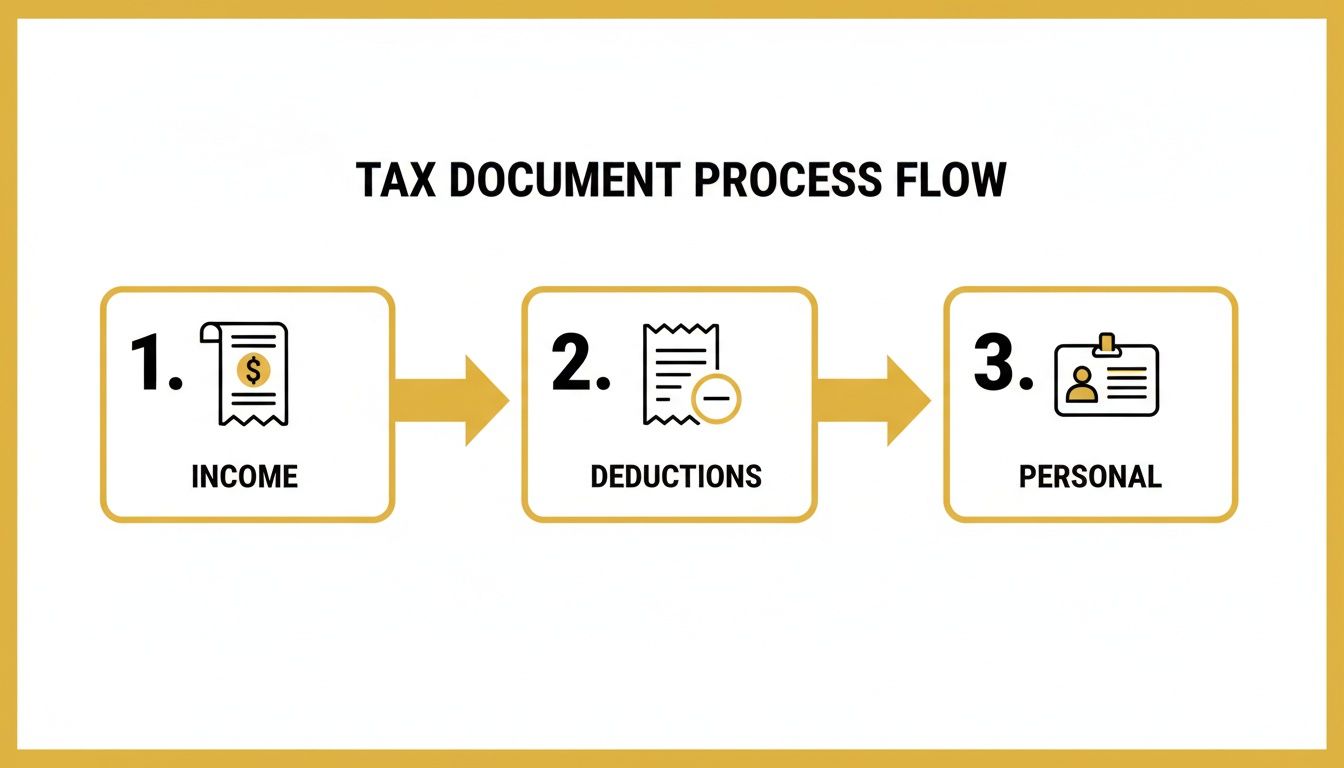
It’s tempting to just accept the pre-filled numbers and move on, but remember: the responsibility for a correct tax return is always yours. Make sure you check every single figure against your own records. A small mistake can cause big delays down the line.Thinking about the tax process as a flow of information is helpful. Most of the income side is automated, but the deductions side requires your direct input. This flowchart breaks down the core components you’ll be dealing with: your income, your deductions, and your personal details.
Entering Your Deductions and Finalising
This is where you have the most control over your tax outcome. The "Deductions" section is where you manually add all your claimable work-related expenses. Did you work from home? This is where you enter your calculated claim. Bought a new uniform, tools, or paid for a professional membership? You claim it here. It's also worth keeping recent tax changes in mind, as they can directly affect your final assessment. For instance, the Australian Government's tax cuts from 2024-25 are set to reduce the tax paid by most workers. Someone earning around $70,000 might see their tax bill shrink by about $1,344 a year by 2025-26. These changes are automatically factored into the myTax calculation, but it helps to be aware of them. Once you’ve entered everything, myTax will give you a real-time estimate of your refund or tax payable. Take a moment to review this summary carefully. If it all looks correct, you just have to tick the declaration box and hit 'submit'. For a more detailed walkthrough, check out our guide on how to lodge your tax return online for extra tips. You’ll get a confirmation once it's lodged, and you can even track its progress right there in your myGov account.Working with a Registered Tax Agent
Lodging your own tax return with myTax is a great option if your financial situation is straightforward. But there comes a point for many of us where getting professional help isn’t just about convenience—it’s a genuinely smart move. If you’re juggling a rental property, dealing with capital gains from selling shares, or earning income from a side hustle, a registered tax agent can be a game-changer. They do a lot more than just plug numbers into a form; they bring a deep, practical understanding of Australian tax law to your specific circumstances. That expertise is crucial when your finances start getting a bit more complicated. An experienced agent will often spot deductions you had no idea existed, making sure you claim every single dollar you're legally entitled to.When to Hire a Tax Professional
Thinking about hiring a tax agent? It’s almost always a wise decision if you're a freelancer, a property investor, or you just feel out of your depth trying to navigate the claims process on your own. A huge bonus is that their fee is tax-deductible, which often means their service pays for itself through the extra tax they save you. The Australian tax system is notoriously complex. In the 2021-22 financial year alone, around 17 million Australians were affected by various tax measures like special deductions and preferential rates. The complexity is real, especially with things like capital gains tax discounts, which were claimed by nearly 1 million taxpayers that year. An agent’s job is to know exactly how these intricate rules apply to you. You can dive deeper into the impact of these government tax measures on the Treasury website.Choosing the Right Tax Agent
First things first: not all accountants are registered tax agents. This is a critical distinction. You need to make sure your chosen professional is registered with the Tax Practitioners Board (TPB). This registration is your guarantee that they have the right qualifications and are bound by a strict code of professional conduct. When you’re looking for an agent, here’s what to look for:- TPB Registration: Don’t just take their word for it. You can check any agent’s registration status yourself on the official TPB register online.
- The Right Experience: Find someone who deals with clients like you day in, day out. Whether you’re a tradie with a ute full of tools, an investor with a share portfolio, or running an online business from home, you want an agent who knows your world.
- Clear Communication: A great agent won’t drown you in jargon. They’ll explain things in plain English so you understand what’s happening with your money.
The process is usually quite simple. It starts with a chat where they get to know your situation and ask for your documents—things like income statements, receipts for expenses, and details of any investments. From there, they prepare the return, walk you through it for your approval, and then lodge it with the ATO on your behalf. A key perk is that they can often secure you a later lodgement deadline than the standard 31 October, giving you invaluable extra time and peace of mind.
Maximising Your Refund with Common Deductions
Uncovering Overlooked Work Expenses
Let's get practical. Deductions often hide in plain sight. Imagine you're a teacher. You probably spend your own money on classroom supplies—stickers, books, stationery, you name it—to help your students. Because those costs are directly related to earning your income, they are absolutely claimable. Or what about a remote worker paying for their own internet and phone? You can claim the work-related portion of those bills. The key is to calculate the percentage of time you use these services for work. If you figure out your internet is used 50% for work, you can claim half of your monthly bill. Simple as that. These are the exact kinds of expenses the ATO's pre-fill service will never know about. It's entirely up to you to keep the records and make the claim.Key Takeaway: Deductions are your best friend at tax time—they reduce your taxable income, which lowers the amount of tax you have to pay. This is different from a tax offset, which is a dollar-for-dollar reduction of your final tax bill. Understanding this difference is vital.
Navigating the Rules for Specific Claims
Good record-keeping is the absolute foundation of any solid tax deduction strategy. You simply don't want to be caught out without proof if the ATO comes knocking. Here are a few common areas where people claim, and what you need to remember:- Self-Education: If you’re taking a course that directly relates to improving skills for your current job, you can claim the costs. This isn't just course fees; it includes textbooks and even your travel to and from the institution.
- Donations: You can claim a deduction for any donation of $2 or more made to a Deductible Gift Recipient (DGR). Just make sure you get a receipt.
- Tools and Equipment: Did you buy tools or equipment for your job? You can claim an immediate deduction for items costing up to $300. For anything more expensive, you’ll need to claim depreciation over its effective life.
Common Questions We Hear About Filing Tax Returns
Even with the best prep work, a few questions always seem to pop up right when you're about to hit 'lodge'. It's completely normal. To help you tackle those last-minute uncertainties, we've put together answers to some of the most common questions our clients ask us.What Happens If I Miss the Tax Return Deadline?
If you're lodging your own tax return, the big date to remember is 31 October. Miss that deadline, and the Australian Taxation Office (ATO) can issue a Failure to Lodge (FTL) penalty. The penalty is calculated at one unit for every 28 days your return is overdue, up to a maximum of five penalty units. The good news? The ATO generally doesn't apply these penalties if you're actually owed a refund. However, if you have a tax bill to pay, interest charges will start racking up on the outstanding amount. This is where using a tax agent is a huge advantage – your deadline is often pushed out to May of the following year, giving you much more breathing room.How Long Until I Get My Tax Refund?
For anyone lodging online through myTax, the process is pretty quick. The standard turnaround is about two weeks, or 14 business days. Many of our clients with straightforward returns see their refunds even faster. Sometimes, though, a return gets flagged for a manual review. This can happen if you have complex deductions or if there's a mismatch with the ATO's pre-filled information. In that case, it might take up to 30 days. You can keep an eye on it by logging into your myGov account, where the status will change from "Processing" to "Issued."A quick heads-up: paper lodgements are much slower. If you mail in your return the old-fashioned way, you could be waiting up to 10 weeks for the ATO to process it and send out your refund.
Do I Need to Lodge a Return If I Earned Less Than the Threshold?
The magic number is the tax-free threshold, which sits at $18,200. If you earned more than that, you absolutely have to lodge. But what if you earned less? You should still lodge a return if your employer took any tax out of your pay during the year. This is a really common situation for students or people who only worked part-time. Filing a tax return is the only way to get that withheld tax back in your pocket as a refund. If you're still unsure, the ATO website has a handy "Do I need to lodge a tax return?" tool that will give you a definite answer.Can I Fix a Mistake on a Return I've Already Lodged?
Yes, you certainly can. It’s more common than you think to realise you forgot to claim a deduction or missed a small bit of income after you've already filed. The ATO lets you amend a tax return for up to two years from the date on your original notice of assessment. The process is straightforward and can be done right from your myGov account. Just find the tax year you need to change, select "amend," and update the details. The ATO will then re-process everything and send you an amended notice of assessment, which will show either a new refund amount or an adjusted tax bill.Navigating tax season can feel like a minefield, but you don't have to go it alone. The experts at Australia Wide Tax Solutions specialise in helping individuals and businesses get the best possible tax outcome with professional, personalised advice. Whether you're behind on your returns, have a rental property, or just want to make sure you're getting every dollar you're entitled to, our team is ready to help. Get in touch with us today for a stress-free tax experience.
The ATO provides guidance through ato.gov.au, the Small Business Support Line (13 28 66), and Online Services for individuals and businesses. For complex situations, a registered tax agent provides advice tailored to your specific circumstances and professional indemnity protection. You can verify agent registration at the TPB register at tpb.gov.au.
Most tax records must be kept for five years from the date of lodgement or the date the transaction occurred, whichever is later. Records must be in English or convertible to English and must be sufficient to explain the income and deductions in your return. The ATO can request records at any time during the retention period.
Consider a registered tax agent when your affairs involve multiple income sources, business activity, investment properties, capital gains, or overseas income. Agents extend your lodgement deadline, provide safe harbour protection, and take professional responsibility for the advice given. Verify registration at tpb.gov.au.
The failure to lodge penalty is based on penalty units ($313 per unit from 1 July 2023), accruing per 28-day period for late returns and BAS lodgements. Incorrect information penalties range from 25% to 75% of the tax shortfall depending on whether the behaviour was careless, reckless, or intentional. Proactive disclosure before an audit begins typically results in significantly reduced penalties.
Tax minimisation is the legal arrangement of your affairs to reduce tax — claiming all eligible deductions, using appropriate structures, and timing income and expenses. Tax avoidance involves arrangements that technically comply with the law but achieve outcomes parliament did not intend. The ATO can apply Part IVA anti-avoidance rules to cancel benefits from avoidance arrangements.
